
Table of Contents
- Why Baking Beats the Dinner Table for Picky Eaters
- Easy Baking Activities for Toddlers: Age-by-Age Milestones
- How to Encourage Kids to Try New Foods Through Baking
- No-Pressure Feeding: Serving Dessert Alongside the Main Meal
- One-Bowl Recipes and Hidden Vegetables for Texture-Sensitive Kids
- Allergy-Friendly and Budget-Friendly Baking Adaptations
- Common Mistakes That Turn Baking into a Mealtime Battle
- Frequently Asked Questions
Last Updated: September 10, 2026
Why Baking Beats the Dinner Table for Picky Eaters
Baking with picky eaters tips work because they flip the script on mealtime pressure. At the dinner table, a child faces a plate they didn't choose and a parent watching every bite. In the kitchen, that same child becomes a creator, and the food becomes something they made rather than something they must survive.
This guide from Lura's Kitchen walks through seven approaches that turn baking into a low-stakes path toward trying new foods. The core idea is simple: when a child stirs, scoops, and decorates, they build familiarity with ingredients before anyone asks them to eat. Many feeding specialists describe this as sensory exposure, and it's one of the most reliable tools parents have.
Here's the tension most guides skip. The dinner table is a performance. Baking is play. That difference changes everything.
Easy Baking Activities for Toddlers: Age-by-Age Milestones
Easy baking activities for toddlers should match what small hands can actually do. A two-year-old cannot crack an egg cleanly, and asking them to try sets everyone up for frustration. Match the task to the milestone and the kitchen stays calm.
Ages 2-3: Sensory Play and Simple Stirring
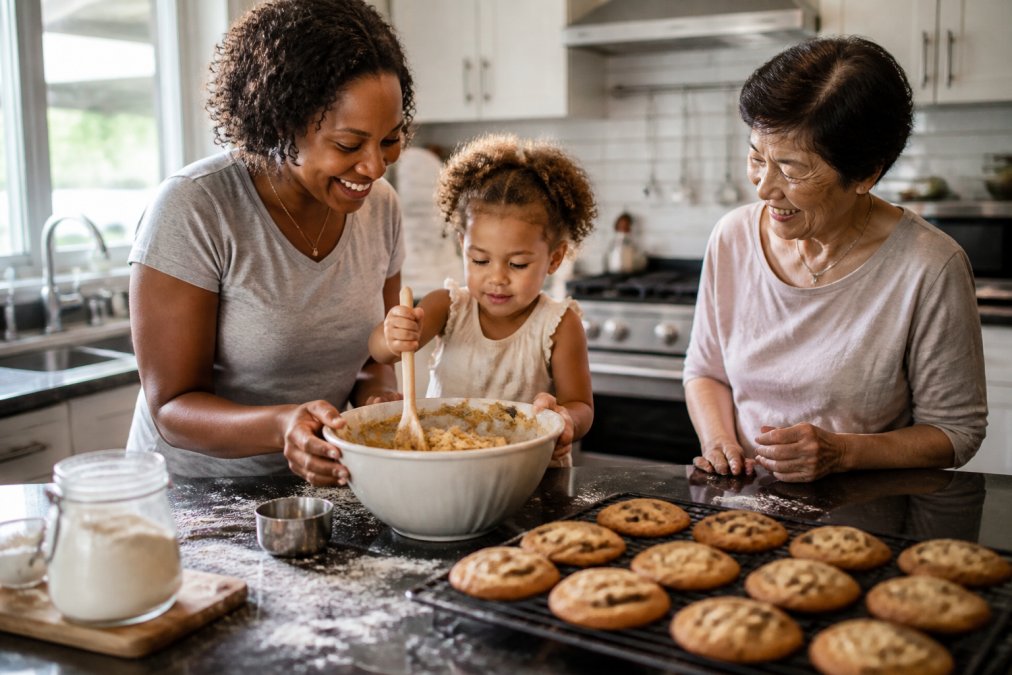
Toddlers at this stage learn through touch. Hand them a wooden spoon and let them stir dry ingredients in a big bowl. Expect spills, and plan for them. The goal is comfort with textures, not a perfect batter.
Ages 4-6: Scooping, Pouring, and Decorating
Preschoolers can scoop, pour, and press dough onto a sheet. Decorating is where they light up. Let them arrange chocolate chips or press a thumbprint into each cookie. This stage builds fine motor skills alongside culinary confidence.
| Age | Best Tasks | Skills Built |
|---|---|---|
| 2-3 | Stirring, pouring, touching | Sensory comfort, self-regulation |
| 4-6 | Scooping, decorating, pressing | Fine motor skills, autonomy |
| 7-9 | Measuring, cracking, timing | Math, sequencing, patience |
| 10+ | Reading recipes, oven help | Independence, planning |
How to Encourage Kids to Try New Foods Through Baking
Encouraging kids to try new foods works best when tasting is optional. A child who helped bake a batch of cookies is far more likely to lick the spoon than a child handed a cookie from a box. Ownership does the persuading.
What most guides miss is the timing. Don't push a taste right when the tray comes out. Let the cookies cool, let the kitchen settle, then leave one within reach. Curiosity usually wins when nobody is watching.
A common mistake is rewarding the first bite with praise so loud it turns the moment into a test. Keep it quiet. "You made these" carries more weight than "Good job eating."
No-Pressure Feeding: Serving Dessert Alongside the Main Meal
Serving dessert alongside the main meal removes its power as a bargaining chip. When a cookie sits on the same plate as dinner, it stops being a prize to earn and becomes just another food. Feeding therapists call this no-pressure feeding, and it works because it ends the negotiation.
The old approach, "finish your dinner and you get dessert," teaches kids that the main meal is a chore and sweets are the reward. That backfires. Instead, plate a small portion of everything together and say nothing. Your child decides what to eat and how much.
It feels strange the first few nights. It also tends to work. Children who see dessert as ordinary food often stop fixating on it.
One-Bowl Recipes and Hidden Vegetables for Texture-Sensitive Kids
One-bowl recipes cut the chaos for texture-sensitive kids. Fewer steps mean fewer surprises, and a single bowl keeps the process predictable. Look for drop cookies, muffins, and simple cakes that don't require shaping or rolling, anything you can mix with one spoon and portion with a scoop.
The texture ladder: move one rung at a time
Texture sensitivity is real, and it isn't stubbornness. A child who gags on a lumpy sauce isn't being difficult. Most feeding practitioners describe tolerance as a ladder, and baking lets you climb it slowly:
- Smooth and uniform. A fully blended batter with no visible pieces, think a plain chocolate chip drop cookie where the chips are mini, not full-size.
- Smooth with soft inclusions. Add mashed banana or finely grated zucchini. The batter still looks even, but the crumb is slightly denser.
- Soft chunks. Fold in softened raisins or very small chips. The child can see the pieces but they give way easily under a bite.
- Crisp or chewy contrast. Toasted oats, chopped nuts, or a crumb topping. This is the last rung, not the first.
Stay on one rung for several batches before moving up. A child who has made the same smooth cookie five times has a baseline of trust that makes rung two feel safe.
How much vegetable actually disappears
Hidden vegetables work when they disappear into the batter, and the ratios matter more than the vegetable itself:
| Vegetable | Prep | Rough Ratio to Flour | What It Does to Texture |
|---|---|---|---|
| Zucchini | Finely grated, squeezed dry | 1/2 cup per 1 cup flour | Adds moisture, keeps crumb soft |
| Sweet potato | Roasted, mashed smooth | 1/3 cup per 1 cup flour | Sweetens, deepens color |
| Pumpkin | Canned puree, drained | 1/3 cup per 1 cup flour | Mild flavor, very even crumb |
| Carrot | Grated fine or pureed | 1/4 cup per 1 cup flour | Slight sweetness, visible flecks if coarse |
Start at the low end of each range. More vegetable means a wetter batter, which can turn a cookie cakey, and a cakey cookie reads as "different" to a picky eater. Add one tablespoon of flour at a time if the dough looks loose.
Why one bowl beats a full recipe
A multi-step recipe with separate bowls for dry and wet ingredients creates three or four decision points where something can go wrong, and each one is a chance for a child to disengage. One bowl means one sequence: dump, stir, scoop, bake. That predictability is the whole point. It also means less cleanup, which matters when the session ends in a refusal and you're the one standing at the sink.
Allergy-Friendly and Budget-Friendly Baking Adaptations
Most picky-eating guides treat allergies as a separate problem. In practice they collide: a child who is already cautious about new textures now also has to trust a cookie that looks different from the one their sibling is eating. That intersection is where baking either works or falls apart, and it's the part nearly every ranking article skips.
Swap mechanics, not just swap names
Simple swaps handle most common allergens, but each one changes the bake. Know the trade-off before you promise a child the same cookie they had last week:
| Challenge | Simple Fix | What Changes in the Bake |
|---|---|---|
| Egg allergy | Flax or applesauce swap | Softer, cakier crumb; cookies spread less and brown slower |
| Gluten-free need | Certified GF blend | Drier dough; add a tablespoon of liquid and rest the batter 10 minutes |
| Nut allergy | Skip nuts, add chips or toasted oats | Same crunch if you toast the oats; less richness |
| Dairy sensitivity | Neutral oil in place of butter | Crisper edge, less caramel flavor |
Always check labels, since cross-contamination varies by brand and facility. For a child with a diagnosed allergy, a "may contain" warning is not a green light, read the whole panel, not just the bolded allergen line.
The picky-plus-allergy problem
Here's the angle most guides miss. A gluten-free or egg-free cookie often looks and feels different from the version a child already trusts, different color, different chew, sometimes a faintly beany aftertaste from legume-based blends. For a texture-sensitive kid, "different" is the same as "unsafe."
Three things help:
- Keep the shape identical. Same scoop size, same thumbprint, same chip placement. Visual sameness buys a lot of trust.
- Introduce the swap before the allergy is a crisis. If your child can eat the standard version, make the adapted one alongside it once, casually, so it isn't a special food reserved for them.
- Never label it. "This one is yours" flags it as other. Put both on the same cooling rack and let the child choose.
Budget math that actually matters
Budget-friendly baking matters more than most articles admit, and the reason is waste, not ingredient cost. A failed batch from scratch, wrong rise, wrong spread, a batter a child refused to touch, costs you the whole ingredient list. A mix costs you one box.
A few practical rules:
- Buy one mix, not five specialty flours. A single box makes a full sheet of cookies, which is enough for several exposure sessions without a pantry of one-use bags.
- Freeze half the dough. Scoop portions onto a sheet, freeze, then bag them. You can bake two cookies at a time instead of a whole batch, so a refusal doesn't waste a tray.
- Reuse the same recipe. Repetition is cheaper and more effective than novelty. The tenth batch of the same cookie builds more comfort than ten different recipes.
- Skip single-use decorations. Sprinkles and colored sugars are the fastest way to spend more on a batch a child won't eat. A fork pressed into the top does the same job.
Common Mistakes That Turn Baking into a Mealtime Battle
The biggest mistake is treating baking as a test. The moment a parent says "just try one bite," the kitchen becomes the dinner table, and the pressure returns. Keep baking about the process, not the outcome.
Other missteps show up often:
- Correcting how a child decorates. Let the sprinkles land where they land.
- Rushing the steps to hit a schedule. Slow is the point.
- Cleaning up mid-activity. It signals the fun is over.
- Comparing siblings. "Your sister tried hers" ends the mood fast.
Let the mess happen. A flour-dusted counter is the cost of a kid who feels at home in the kitchen.
Baking with a picky eater is less about the cookie and more about the confidence your child builds along the way. At Lura's Kitchen, our easy-to-bake premium mixes are made for exactly this: simple, mess-free recipes that let kids participate without a stressful cleanup. Our Classic Madear's Old Fashion Teacake Mix, Langston's No-Nonsense Chocolate Chip, and Tura Lura's Chocolate Chip Pecan make plenty of cookies to share. As a multi-generational, woman-majority, minority-owned benefit corporation, we believe baking should feel like home. It's all in the mix. Get started with Lura's Kitchen and turn your next batch into a family tradition.
Frequently Asked Questions
How can I get my picky eater involved in the kitchen without a huge mess?
Start with one-bowl recipes and pre-measured mixes. Let your child handle just one job, like pouring the mix or stirring, while you manage the rest. Place a baking mat under the bowl, use a large mixing bowl to contain spills, and keep wipes nearby. The goal is participation, not perfection. Even toddlers can scoop and dump with a little guidance, and the shared activity builds culinary confidence over time.
What should I do if my child refuses to taste what we baked together?
Don't push. In feeding therapy, repeated neutral exposure matters more than any single bite. Keep serving the baked item alongside familiar foods without commentary, and let your child see you enjoying it. Research on sensory exposure shows it can take 10 to 15 exposures before a child accepts a new food. Baking together counts as exposure even if they never taste it that day.
What are the benefits of baking with children who are picky eaters?
Baking offers no-pressure food exploration. Kids touch, smell, and handle ingredients before they ever taste them, which builds familiarity. It also develops fine motor skills through scooping, pouring, and decorating. Children gain autonomy when they choose add-ins or shapes, and that sense of control reduces food anxiety. The finished cookie becomes a point of pride, which makes trying it feel like their idea, not yours.
Are there simple, mess-free baking activities for toddlers with food aversions?
Yes. Pre-measured gourmet mixes remove the measuring chaos. Give your toddler a wooden spoon and let them stir for 30 seconds, then take over. Cookie drop recipes work well because there's no rolling or cutting. For texture-sensitive kids, start with smooth dough and avoid chunky add-ins. Let them watch the oven through the window, and involve them in pressing the cookie scoop down. The sensory input stays gentle and predictable.