

Table of Contents
- Why Plant-Based Milk Deserves a Spot in Your Cookie Dough
- How Plant-Based Milk Affects Cookie Dough Texture and Spread
- Finding the Best Plant-Based Milk for Baking Cookies
- Exact Substitution Ratios and When to Adjust Them
- Baking Oat Milk Chocolate Chip Cookies That Taste Homemade
- How to Keep Vegan Cookies Chewy Instead of Cakey
- Troubleshooting Cookie Texture When Using Plant Milk
- Stock Your Pantry and Bake a Batch This Weekend
- Frequently Asked Questions
Last Updated: November 6, 2026
Why Plant-Based Milk Deserves a Spot in Your Cookie Dough
Plant-based milk is a liquid made from nuts, grains, or legumes that replaces dairy milk in baking, and it changes cookie dough in ways worth understanding before you pour. Home bakers often treat oat, soy, and almond milk as simple swaps. They are not. Each one brings its own fat, protein, and sugar to the bowl.
Here is the good news. Once you know how these milks behave, you can pick the right one for the cookie you want.
Below, we walk through texture, ratios, and fixes so your next batch comes out right.
How Plant-Based Milk Affects Cookie Dough Texture and Spread
Plant-based milk changes cookie dough through three levers: fat, protein, and water content. More fat means a softer, richer crumb. More protein means better structure and less spread. More water means a looser dough that spreads wider on the sheet.
Oat milk sits in the middle, with a creamy body and moderate fat. Soy milk brings the most protein of the common options, which helps cookies hold their shape. Almond milk is thin and low in fat, so doughs made with it tend to spread more.
Watch out: pouring a full splash of thin almond milk into a stiff dough can turn it slack fast. Add it a tablespoon at a time.
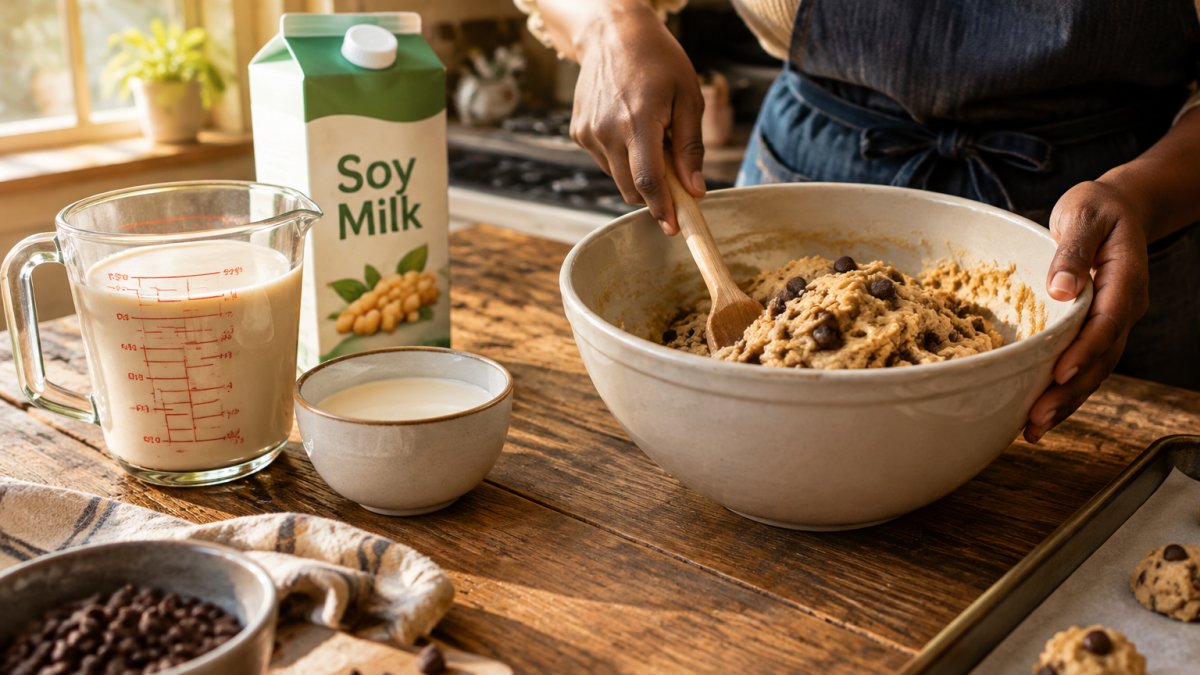
Finding the Best Plant-Based Milk for Baking Cookies
The best plant-based milk for baking cookies depends on the texture you want, not on which carton is cheapest. Unsweetened oat milk is the safest default for most recipes because its moderate fat and starch give dough a creamy body without thinning it out. Soy milk is the pick when you want structure. Almond milk suits crisp, thin cookies. Coconut is a richness tool, not an all-purpose pour.
Here is how we would rank them for a standard chocolate chip cookie:
- Oat milk for balanced texture and mild taste
- Soy milk for structure and protein
- Coconut milk for richness, in small amounts
- Almond milk for light, crisp cookies
Oat, Soy, Almond, and Coconut: A Side-by-Side Comparison
The differences that matter are fat, protein, water, and flavor. Fat tenderizes and carries flavor. Protein builds structure and limits spread. Water loosens dough and encourages spread. Flavor rides along with all three.
| Milk | Fat Level | Protein | Water | Flavor | Effect on Cookies | Best For |
|---|---|---|---|---|---|---|
| Oat | Moderate | Moderate | Moderate | Mild, slightly sweet | Soft, even spread | All-purpose batches |
| Soy | Moderate | High | Moderate | Neutral, beany edge | Holds shape, tender crumb | Chewy cookies |
| Almond | Low | Low | High | Nutty, faint | More spread, crisper edges | Thin, crisp cookies |
| Coconut (carton) | Moderate | Low | Moderate | Coconut-forward | Rich, slightly heavier dough | Small-batch treats |
| Coconut (canned) | High | Low | Low | Strong coconut | Dense, heavy, creamy | Replacing cream in small amounts |
A common pattern is that bakers blame the flour when a dough spreads, but the milk's water content is often the real culprit. Almond milk is the thinnest of the group, so a full splash can turn a stiff dough slack fast. Add it a tablespoon at a time.
Carton Milk vs. Canned Coconut Milk
Carton coconut milk and canned coconut milk are not interchangeable. Carton coconut milk is diluted to a drinkable consistency, with moderate fat and a light coconut flavor. Canned coconut milk is thick and rich, with far more fat and much less water. When a recipe calls for cream, canned coconut milk is the closer stand-in, but start with about three-quarters of the called-for amount and thin only if the dough needs it. Using canned coconut milk as a 1:1 swap for a thin carton milk will leave dough heavy and greasy.
Unsweetened vs. Sweetened and Flavored Varieties
Unsweetened, unflavored plant-based milk is the safest choice for cookies. Sweetened and vanilla-flavored versions add sugar and aroma you did not plan for. That extra sugar can push browning too fast and make cookies taste oddly sweet. Vanilla-flavored cartons also stack with the vanilla extract already in most recipes, which can make the finished cookie taste one-note.
If vanilla oat milk is all you have, cut the added sugar in your recipe slightly. Small adjustment, real difference. If a sweetened carton is your only option, taste the dough before baking and adjust from there.
Exact Substitution Ratios and When to Adjust Them
Use a 1:1 swap for unsweetened oat or soy milk in most cookie recipes. Then check the dough before you chill it.
The ratio shifts when the milk's fat and water content differ from dairy milk:
- Coconut milk (canned): start with three-quarters of the called-for amount, since it is thicker and richer
- Almond milk: reduce by about 1 tablespoon per half cup to offset extra water
- Sweetened or flavored cartons: use the full amount but cut added sugar slightly
- Thick homemade nut milks: thin with a little water before measuring, or reduce by 1 to 2 tablespoons
Reading the Dough Before You Chill It
Most cookie recipes need only a small amount of liquid, so the milk is rarely the star. A common pattern is that changing the fat or the egg substitute matters more than changing the milk. Judge the dough by feel, not by the clock:
- Dough looks wet and glossy: add 1 to 2 tablespoons of all-purpose flour
- Dough looks crumbly and dry: add plant milk 1 tablespoon at a time
- Dough feels sticky but holds shape: it is probably right, chill it and reassess
- Dough feels greasy: the milk is too rich, reduce it next time or switch to oat
A common mistake is dumping in the full amount at once. Measure, mix, then judge. Add liquid in small increments and stop as soon as the dough comes together.
When to Adjust Beyond the Milk
Sometimes the milk is fine and something else needs a nudge. If cookies spread too much even after chilling, the dough likely has excess water, reduce the milk by 1 tablespoon per half cup next time. If cookies stay domed and thick, the dough may be too stiff, add milk 1 teaspoon at a time. If cookies taste flat, check whether a flavored carton is muting the other ingredients.
Watch out: adjusting flour and milk at the same time makes it hard to know which change fixed the dough. Change one variable per batch and note what you did.
Baking Oat Milk Chocolate Chip Cookies That Taste Homemade
Oat milk chocolate chip cookies taste homemade when you balance fat, sugar, and chill time. Cream your plant-based butter and brown sugar well, add the oat milk slowly, and chill the dough for at least 30 minutes before baking.
That chill matters. Cold dough spreads less, so cookies come out thick and chewy instead of flat.
For a shortcut that still feels homemade, our cookie mixes take the guesswork out of measuring. You add the fresh ingredients, and the dry blend is already balanced. Kids can scoop and shape right alongside you, and there is plenty to share.
How to Keep Vegan Cookies Chewy Instead of Cakey
Chewy vegan cookies come down to moisture control and sugar choice. Brown sugar holds moisture, so use more of it than white sugar. Pull the cookies from the oven while the centers still look slightly underdone, then let them finish on the hot sheet.
Other moves that help:
- Use plant-based butter rather than oil for a chewier bite
- Skip the extra baking powder, which lifts cookies into cake territory
- Rest the dough so flour fully hydrates
- Store cooled cookies in a sealed container with a slice of bread
If you are testing whether simple vegan dessert recipes really work for busy families, start with one small batch and adjust from there.
Troubleshooting Cookie Texture When Using Plant Milk
Cookie texture problems with plant milk usually trace back to too much liquid or the wrong milk type. Flat cookies mean excess water or warm dough. Dry, crumbly cookies mean too little fat or too much flour.
Quick fixes:
| Problem | Likely Cause | Fix |
|---|---|---|
| Flat, spreading cookies | Thin milk, warm dough | Chill dough, reduce milk |
| Dry, crumbly cookies | Too much flour | Add milk 1 tbsp at a time |
| Cakey center | Too much leavening | Cut baking powder slightly |
| Greasy edges | High-fat milk | Use less coconut milk |
For dough that turns out too dry, a step-by-step guide on how to fix dry cookie dough walks through the repairs. And if your cookies flatten at elevation, see how to bake cookies at high altitude without flat results for altitude-specific adjustments.
If almond flour is your base, our guide on how to bake cookies with almond flour covers mixing, shaping, and cooling in seven steps.
Stock Your Pantry and Bake a Batch This Weekend
Stock your pantry with unsweetened oat milk, plant-based butter, and a reliable cookie mix, then bake a batch this weekend. The right milk makes dough easier to handle, and a good mix removes the measuring stress so the whole family can join in.
At Lura's Kitchen, our mixes are built for exactly that: easy, fun, and simple baking with no mess and no excess. Our Tura Lura's Chocolate Chip Pecan mix turns out soft, chewy cookies with golden edges, and there is plenty to share. It's all in the mix.
Ready to bake cookies that taste homemade without the hassle? Lura's Kitchen makes it simple with legacy-inspired recipes, family-friendly steps, and batches big enough to share. Get started with Lura's Kitchen and put warm, fresh cookies on the table this weekend.
Frequently Asked Questions
What type of plant-based milk is best for baking cookies?
Oat milk and soy milk work best in most cookie recipes because their fat and protein content closely mimics dairy milk, helping dough hold structure and brown evenly. Almond milk is thinner and works in recipes with plenty of butter or oil, while canned coconut milk adds richness but a noticeable coconut flavor. Choose unsweetened, unflavored versions so the vanilla and chocolate in your cookies stay front and center.
Do I need to adjust the amount of plant-based milk in a cookie recipe?
Check the dough before chilling. If it sticks to your fingers instead of pulling away from the bowl, add all-purpose flour one tablespoon at a time.
Can plant-based milk make cookies softer or chewier?
Yes. Fat and protein in plant-based milk slow gluten development and hold moisture in the crumb, which keeps cookies tender. Oat milk and soy milk are the strongest choices for chew, while watery almond milk does less. For extra chew, use brown sugar, pull the cookies from the oven while the centers still look slightly underdone, and let them finish setting on the hot pan.
Should I use sweetened or unsweetened plant-based milk in cookies?
Use unsweetened, unflavored plant-based milk in almost every cookie recipe. Sweetened varieties add sugar that can make dough spread too fast and brown too dark, and vanilla or chocolate flavors can clash with your recipe. The one exception is a recipe that already leans savory or low-sugar, where a lightly sweetened oat milk may round out the flavor without tipping the balance.
