

Table of Contents
- What Makes Old Fashioned Cookie Mixes Different
- Basic Cookie Mix Ingredients You'll Need
- How to Combine the Dry Ingredients
- Homemade Cookie Mix Recipe: Step-by-Step
- DIY Cookie Mix in a Jar: Layering and Gifting
- Cookie Mix Storage Tips for Freshness and Safety
- Baking Your Old Fashioned Cookies: Temperature, Time, and Texture
- Common Mistakes to Avoid When Making Cookie Mixes
- Frequently Asked Questions
Last Updated: October 4, 2026
What Makes Old Fashioned Cookie Mixes Different
Old fashioned cookie mixes stand apart from modern convenience baking because they focus on simplicity and real flavor. These mixes skip unnecessary additives and rely on quality dry ingredients that let butter and eggs shine through.
At Lura's Kitchen, we've built our legacy on this principle. Our old fashioned cookie mixes blend traditional Southern baking methods with modern convenience. You add just two wet ingredients, butter and eggs, and the rest is already mixed for you.
The difference comes down to ingredient quality and how they're combined. Old fashioned mixes use whole spices, real vanilla, and quality chocolate instead of artificial flavoring. The dry ingredients are balanced so that when you add your wet ingredients, the chemistry works perfectly every time.
This approach also means you control the final product. You choose your butter quality. You pick your eggs. You decide how long to bake. That hands-on element is what makes old fashioned baking feel special, it's simple, but it's yours.
Basic Cookie Mix Ingredients You'll Need
The Dry Base
The foundation of any old fashioned cookie mix starts with all-purpose flour. This is your primary structure. Most cookie mixes use between 1.5 to 2 cups of flour per batch, depending on how many cookies you want to make.
Granulated sugar and brown sugar come next. Granulated sugar adds sweetness and helps cookies spread slightly. Brown sugar brings moisture and deeper flavor. A typical mix uses roughly equal parts of each, about half a cup of granulated and half a cup of brown sugar packed down.
Baking powder and baking soda are your leavening agents. Baking powder helps cookies rise gently. Baking soda adds spread and chewiness. You need only small amounts, usually one teaspoon of baking powder and half a teaspoon of baking soda per batch.
Salt might seem minor, but it's essential. A quarter teaspoon enhances all the other flavors and balances sweetness. Without it, your cookies taste flat.
Flavor and Texture Additions
This is where old fashioned mixes get their character. Cinnamon is the classic choice, about one teaspoon per mix creates warmth without overpowering. Some recipes add nutmeg for deeper spice notes, just a quarter teaspoon.
Vanilla is non-negotiable. Use pure vanilla extract or vanilla powder. About one teaspoon of extract brings authentic flavor that artificial versions can't match.
For chocolate chip cookies, semisweet chocolate morsels are traditional. A cup of morsels gives you plenty of chocolate in every bite. For pecan versions, chopped pecans add buttery crunch, about three-quarters of a cup works well.
| Ingredient | Purpose | Typical Amount |
|---|---|---|
| All-purpose flour | Structure | 1.5-2 cups |
| Granulated sugar | Sweetness, spread | 0.5 cup |
| Brown sugar | Moisture, depth | 0.5 cup |
| Baking powder | Rise | 1 teaspoon |
| Baking soda | Spread, chewiness | 0.5 teaspoon |
| Salt | Flavor balance | 0.25 teaspoon |
| Vanilla extract | Flavor | 1 teaspoon |
| Cinnamon | Warmth | 1 teaspoon |
| Chocolate or nuts | Texture | 0.75-1 cup |
How to Combine the Dry Ingredients
Start with a mixing bowl large enough to hold all your dry ingredients comfortably. Pour in your flour first, then add both sugars. Use a pastry blender or fork to break up any brown sugar clumps. Brown sugar tends to pack down, so this step matters.
Add your baking powder, baking soda, salt, and spices. Stir everything together thoroughly with a whisk or fork. Make sure the leavening agents are evenly distributed, clumps of baking soda create bitter spots in your cookies.
If you're adding chocolate or nuts, fold them in gently at the end. This keeps them from breaking up and ensures they're spread throughout the mix.
Homemade Cookie Mix Recipe: Step-by-Step
Creating Your Base Mix
Step 1: Measure your flour carefully. Use a spoon to scoop flour into your measuring cup, then level it off with a knife. Don't pack it down. This gives you the right amount without making cookies dense.
Step 2: Combine dry ingredients in a large bowl. Add your flour, both sugars, baking powder, baking soda, salt, and spices. Whisk everything together for about one minute. You want an even, light texture.
Step 3: Add chocolate or nuts if using. Fold them in gently with a spatula. Make sure they're distributed evenly throughout the mix.
Step 4: Check for lumps. Run the mixture through a fine-mesh sieve if you see any clumps. This is especially important if you're storing the mix for later.
Your dry mix is now ready to use or store.
Adding Wet Ingredients When You Bake
When you're ready to bake, you'll need butter and eggs. Room-temperature butter blends smoothly into the dry mix. Cold butter creates lumps that don't incorporate well.
Softened butter (about 6 ounces or one-and-a-half sticks) gets mixed with the dry ingredients first. Use an electric mixer on medium speed for about one minute. The mixture should look crumbly, like coarse sand.
Add eggs and mix on low speed until just combined. Don't overmix. Stop as soon as you see no streaks of egg white.
If your recipe calls for vanilla, add it with the egg. A teaspoon of vanilla extract brings authentic flavor that makes a real difference.
DIY Cookie Mix in a Jar: Layering and Gifting
Layered cookie mixes in jars make beautiful gifts. The visual appeal and personal touch set them apart from store-bought options.
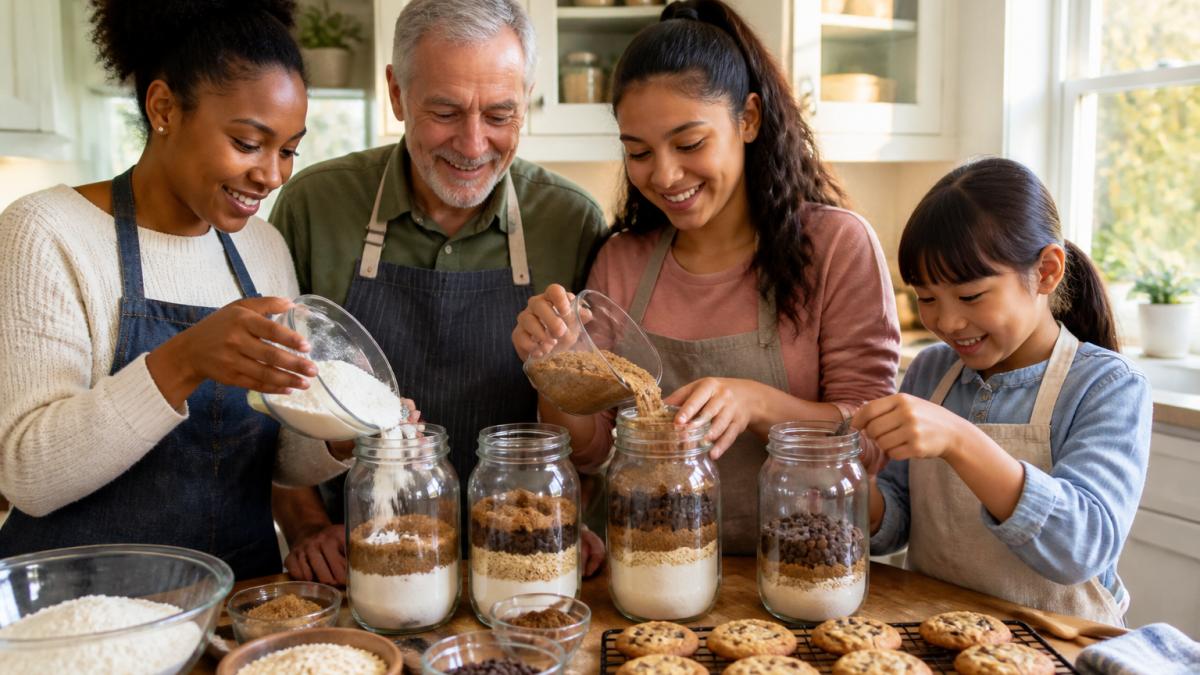
Start with a clean quart-sized mason jar. Layer your dry ingredients in this order:
- All-purpose flour (bottom layer)
- Granulated sugar
- Brown sugar
- Chocolate morsels or nuts
- Baking powder, baking soda, salt (mixed together in a small container, then sprinkled on top)
- Cinnamon and spices (top layer)
The colors create a beautiful gradient. The layers stay separated because of their different densities.
Include a tag with baking instructions. Write clearly: "Add softened butter and eggs. Mix until just combined. Bake at 350°F for 10-12 minutes."
This approach works because the dry ingredients don't mix during storage. When someone receives the jar, they can see exactly what's inside. The presentation makes the gift feel thoughtful and homemade.
Cookie Mix Storage Tips for Freshness and Safety
Airtight Storage Methods
Airtight containers are essential for keeping your cookie mix fresh. Moisture is the enemy. Even a small amount of humidity causes brown sugar to clump and spices to lose potency.
Glass containers with tight-sealing lids work best. Mason jars are ideal, they seal completely and let you see what's inside. Plastic storage bags designed for dry goods also work well if you press out excess air before sealing.
Classic Madear’s Old Fashion Teacake Mix →
Label your containers with the date and contents. This helps you track freshness and remember exactly what's in each mix.
Store your mixes in a cool, dark place. A pantry away from the stove is perfect. Avoid areas near windows where sunlight can fade colors and degrade spices.
Shelf Life and Freshness Checks
A properly stored old fashioned cookie mix stays fresh for three to four months. The limiting factor is usually the spices. Cinnamon and vanilla gradually lose potency over time.
Check your mix before baking. Open the container and smell it. Fresh mixes have a strong, pleasant aroma. If the smell is faint or off, the mix has lost quality.
Look for signs of moisture. If you see clumping in the brown sugar or the flour looks wet, don't use it. Moisture creates conditions for mold growth.
Chocolate and nuts can develop rancid flavors over time. If your mix smells off or tastes bitter when baked, it's time to make a fresh batch.
Baking Your Old Fashioned Cookies: Temperature, Time, and Texture
Preheating and Baking Temperature
Preheat your oven to 350°F about 15 minutes before baking. This temperature is ideal for old fashioned cookies. It's hot enough to set the edges while keeping the centers soft.
Use an oven thermometer to verify the actual temperature. Many home ovens run hot or cold. An accurate temperature makes the difference between perfectly baked cookies and ones that spread too much or bake unevenly.
Place your dough on an ungreased cookie sheet or parchment-lined baking sheet. Space cookies about two inches apart. They'll spread slightly during baking.
Doneness Cues and Cookie Texture
Bake for 10 to 12 minutes. The edges should look lightly golden. The centers will still look slightly underdone, that's correct. Cookies continue cooking on the hot sheet after you remove them from the oven.
Soft, chewy cookies are done when the edges are set but the centers still jiggle slightly when you gently shake the pan. This takes about 10 minutes at 350°F.
Crispier cookies need another minute or two. Bake until the entire cookie looks set, about 12 minutes.
Let cookies cool on the baking sheet for two minutes. Then transfer them to a wire rack. This prevents them from breaking and lets them firm up as they cool.
The texture of old fashioned cookies depends on when you pull them from the oven. Underbaked cookies are chewy. Fully baked cookies are tender with crispy edges. There's no single "right" answer, it's your preference.
Common Mistakes to Avoid When Making Cookie Mixes
Packing flour too tightly is the most common mistake. Packed flour makes cookies dense and heavy.
Using cold butter prevents proper mixing. Softened butter at room temperature blends smoothly into the dry mix.
Overmixing once you add wet ingredients develops gluten and toughens cookies. Mix just until no streaks of egg remain. Stop immediately.
Not distributing leavening agents evenly creates bitter spots from baking soda. Whisk your dry ingredients thoroughly.
Skipping the preheat step causes uneven baking. A properly preheated oven ensures consistent results. Use an oven thermometer to verify temperature.
Storing mixes in humid areas ruins them. Moisture causes brown sugar to clump and spices to lose flavor.
Making old fashioned cookie mixes at home puts you in control of every ingredient and every step.
Lura's Kitchen understands that simplicity matters.
When you bake with intention, you create more than cookies. You create moments. You create memories. You create something to share.
FDA guidance on food storage and shelf life
King Arthur Baking Company's cookie baking guide
America's Test Kitchen cookie science research
Frequently Asked Questions
What are the basic ingredients in an old fashioned cookie mix?
A classic old fashioned cookie mix starts with all-purpose flour, granulated sugar, brown sugar, baking powder, baking soda, and salt. From there, you add flavor with vanilla, cinnamon, and nutmeg. For texture and richness, include chocolate morsels, nuts like pecans, or other mix-ins. The beauty of old fashioned mixes is their simplicity, just a few quality ingredients combined to create homemade flavor when you add butter and eggs at baking time.
How long does a homemade cookie mix stay fresh?
Stored in an airtight container in a cool, dry pantry, a homemade cookie mix stays fresh for 3 to 6 months. If you include ingredients with nuts or chocolate, use it within 3 months since fats can become rancid. Always check for signs of freshness, off smells or visible moisture, before baking.
Can I make a DIY cookie mix in a jar as a gift?
Absolutely. Layer your dry ingredients in a clear glass jar, alternating colors for visual appeal: flour on the bottom, then sugars, then baking powder and soda, then spices and mix-ins on top. Include a label with baking instructions that specify the butter and eggs to add, plus baking temperature and time. Mason jars or similar airtight containers work best for keeping the mix fresh during storage and transport.
What's the difference between old fashioned and modern cookie mixes?
Old fashioned cookie mixes rely on simple, recognizable ingredients and traditional flavor profiles like vanilla, cinnamon, and nutmeg. Modern commercial mixes often include additives, preservatives, and chemical leavening agents designed for shelf stability. Homemade old fashioned mixes let you control quality, skip unnecessary additives, and create cookies with authentic, nostalgic flavor, the kind that tastes like it came from a family recipe passed down through generations.