
Last Updated: October 25, 2026
Quick Summary
Healthy cookie alternatives for school lunches use real ingredients like quality chocolate, pure vanilla, whole grains, and nuts instead of artificial additives and refined sugars. Homemade options from quality mixes, oat-based cookies, and fruit pairings deliver the taste kids crave while supporting steady energy and focus through the school day.
- A half-cup of rolled oats contributes roughly 4 grams of fiber and 5 grams of protein per cookie
- Homemade cookies freeze beautifully for up to three months, so one baking session yields snacks for weeks
- Pairing one small cookie with fresh fruit and a protein item like cheese or yogurt creates a more satisfying, balanced snack
- Chocolate chip pecan cookies add healthy fats and minerals, but always check your school's allergy policy before packing nuts
- Portioning cookies into single servings in small containers prevents overeating and makes packing lunch faster
Table of Contents
- Why Healthy Cookie Alternatives Matter for School Lunches
- Homemade Gourmet Cookie Mixes: A Better Alternative to Packaged Snacks
- Whole-Grain and Oat-Based Cookies for Lasting Energy
- Healthy Lunchbox Treats for Kids Beyond Cookies
- Fruit-Based Snacks for Kids: Natural Sweetness Without Sugar Crashes
- Easy Homemade Snacks for Kids You Can Prep Ahead
- Healthy Snacks for School: Storage, Shelf Life, and Portioning
- Start Baking Healthier Lunches with Lura's Kitchen
- Frequently Asked Questions
Why Healthy Cookie Alternatives Matter for School Lunches
Packing school lunches means balancing nutrition with what kids will actually eat. Most store-bought cookies are loaded with added sugars and artificial ingredients.
At Lura's Kitchen, healthy cookie alternatives for school lunches start with what you put into them.
A small shift compounds over 180 school days: kids who eat real ingredients instead of processed snacks report better afternoon focus, steadier energy, and fewer sugar crashes that derail learning.
Homemade Gourmet Cookie Mixes: A Better Alternative to Packaged Snacks
The simplest path to healthier cookies is a premium mix that skips artificial flavors and preservatives. Quality gourmet mixes deliver homemade flavor with minimal effort, just add butter and eggs, then bake.
Homemade gourmet cookie mixes beat packaged snacks because they use real vanilla, quality chocolate, and simple baking staples instead of chemical replacements.
A single batch yields plenty of cookies, enough for the week portioned into lunchboxes or stored for grab-and-go mornings.
Soft, Buttery Teacakes with Real Vanilla and Nutmeg
Teacakes are an underrated lunchbox option: softer than traditional cookies, and the warm spice profile keeps kids interested beyond the first bite. Soft, buttery teacakes with real vanilla and nutmeg bring Southern baking tradition into modern school lunches.
Vanilla and nutmeg create a subtle sweetness. Kids who might reject "healthy" snacks often accept teacakes because they taste genuinely good, not like a compromise.
Chocolate Chip Cookies Without the Artificial Ingredients
Chocolate chip cookies are the gold standard for school lunches, familiar, beloved, and the one snack most kids will actually eat.
Chocolate chip cookies without the artificial ingredients use real semisweet chocolate morsels and pure vanilla. Just flour, sugar, butter, eggs, chocolate, and vanilla, ingredients you recognize.
The taste test is immediate: real chocolate melts on the tongue, pure vanilla carries the flavor, and homemade cookies have a tender center with slightly crisp edges.
Chocolate Chip Pecan Cookies for Added Nutrition
Pecans transform a standard chocolate chip cookie into a snack with staying power. Chocolate chip pecan cookies for added nutrition combine chocolate's familiar appeal with tree nuts' nutritional benefit.
Pecans add buttery depth and crunch, plus healthy fats, fiber, and minerals.
The trade-off: pecan cookies work best for kids without nut allergies. Always check your school's allergy policy before packing nuts.
Whole-Grain and Oat-Based Cookies for Lasting Energy
Rolled oats are the workhorse: a half-cup contributes roughly 4 grams of fiber and 5 grams of protein, plus a chewy bite kids like. Quick oats work in a pinch but give a softer cookie; steel-cut oats are too hard unless soaked first. Toasting oats 5-7 minutes at 350°F deepens the flavor and keeps the cookie from tasting raw.
A Simple Formula for a Filling Oat Cookie
For a protein lift without nuts, stir in 2 tablespoons of ground flaxseed or 1/4 cup of oat bran; both add fiber without changing the flavor enough for kids to notice. If your school allows seed butter, a tablespoon of sunflower seed butter swirled into the dough adds creaminess and protein.
Allergy-Aware Oat Cookies for Nut-Restricted Classrooms
Many classrooms are nut-free, and oat cookies adapt well. Skip pecans, walnuts, and almond butter; use sunflower or pumpkin seed butter instead, and check labels for "may contain tree nuts" language if the policy is strict. For gluten-free classrooms, certified gluten-free rolled oats plus a measure-for-measure gluten-free blend substitute cleanly; add 1/4 teaspoon xanthan gum per cup if the blend doesn't include it.
Make-Ahead, Storage, and Portioning
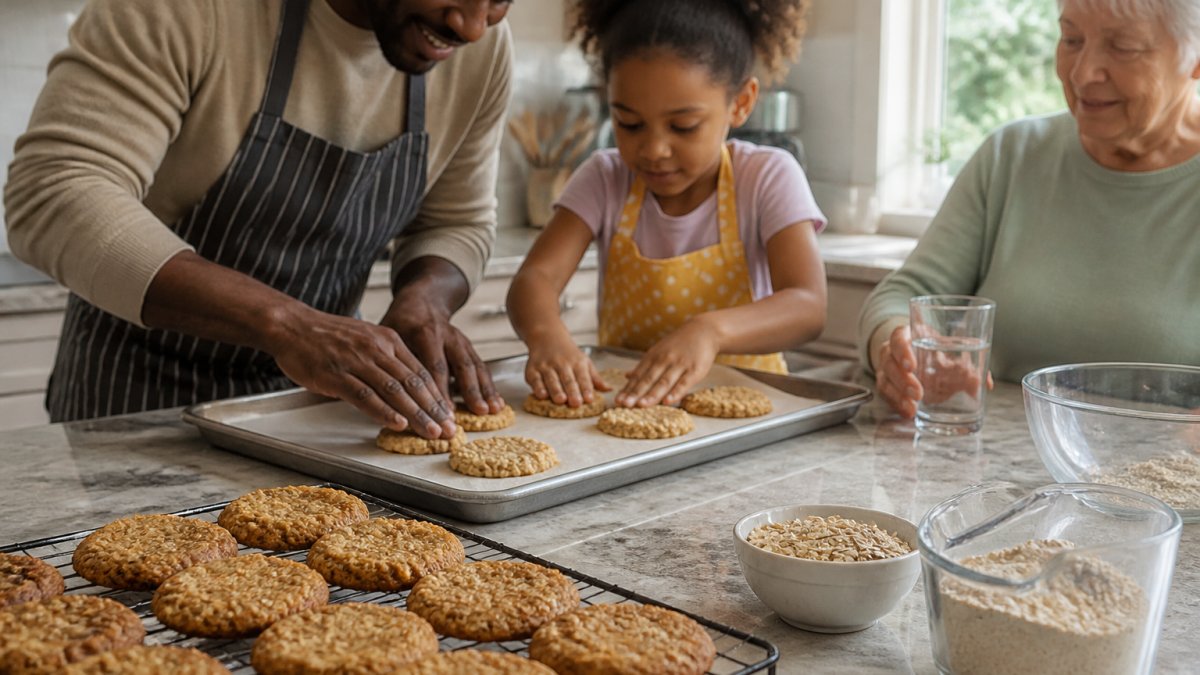
Portion for younger kids: a 1-tablespoon cookie suits preschool or early-elementary lunchboxes, while a 2-tablespoon cookie suits older kids. Avoid oversized bakery-style cookies. Pair one oat cookie with a cheese stick, a hard-boiled egg, or plain yogurt to add protein and turn it into a balanced snack.
Healthy Lunchbox Treats for Kids Beyond Cookies
Cookies aren't the only option. Fruit, nuts, yogurt, and whole-grain crackers all deliver nutrition without the sugar load of traditional desserts.
Rice cakes, apple slices with a little honey, whole-grain crackers with cheese, raisins mixed together: these are different textures and flavors that keep kids engaged with snacking.
Rotating between cookies and other options prevents snack fatigue. Kids who eat the same treat daily eventually reject it, and variety spreads nutritional benefits across food groups.
Fruit-Based Snacks for Kids: Natural Sweetness Without Sugar Crashes
Fruit delivers sweetness without the refined sugar and artificial ingredients in candy or mass-produced snacks, but lunchbox value depends on how you pack it. A whole apple, a handful of grapes, and a fruit leather differ in fiber, sugar concentration, texture, and how well they survive a backpack. Treating fruit as a real cookie alternative means choosing the right form and pairing it so kids stay full.
Madear’s Old Fashion Teacakes (baked) →
Fresh, Dried, and Fruit-Based: What Each Form Delivers
Fresh fruit is the highest-volume, highest-water option, filling for relatively few calories.
Dried fruit concentrates both flavor and sugar. Portion size is important: a 2-tablespoon scoop is reasonable, while a full snack bag is closer to candy.
Fruit-based snack bars and fruit leathers vary wildly: some are essentially pressed fruit with fiber, others closer to candy with added syrups. Read the label.
Pairing Fruit With a Cookie for a Balanced Snack
The strongest lunchbox move is pairing, not replacing. A homemade cookie plus an apple or berries creates a snack with fiber, carbohydrate, and a little fat or protein, more satisfying than either alone. One small cookie, one piece of fresh fruit, and one protein item such as a cheese stick, hard-boiled egg, or plain yogurt keeps kids full from lunch to dinner.
For a dairy-free lunchbox, replace the cheese stick with roasted chickpeas or edamame, both of which add protein.
Choking and Texture Considerations for Younger Kids
Fruit texture matters for the youngest lunchbox crowd. Whole grapes, cherry tomatoes, and large apple chunks are common choking hazards for children under about 4. Quarter grapes lengthwise, slice apples into thin matchsticks, and halve berries for toddlers and preschoolers.
For older elementary kids, texture is about preference. Some reject soft berries that bruise in a backpack; sturdier options like apple slices tossed with lemon juice, orange segments, or firm grapes travel better.
Storage and Prep-Ahead for the School Week
Fresh fruit is best prepped in batches. Wash and dry grapes and berries on Sunday, store them in airtight containers lined with a paper towel, and portion apple slices with a squeeze of lemon to slow browning. Dried fruit keeps for months in the pantry, a reliable backup when fresh fruit runs out. Frozen berries thaw by lunchtime but release juice, so pack them separately from cookies.
Easy Homemade Snacks for Kids You Can Prep Ahead
Meal prep for school lunches doesn't require hours in the kitchen. A quality cookie mix takes 15 minutes to prepare and 12-15 minutes to bake, and one afternoon yields enough cookies for the week. Easy homemade snacks for kids you can prep ahead eliminate the daily scramble of figuring out what to pack.
The freezer is your friend. Baked cookies freeze beautifully for up to three months. Bake a double batch on Sunday, freeze half, and you've got backup snacks for weeks that thaw to room temperature by lunchtime.
Prep-ahead strategies also reduce decision fatigue. When snacks are already baked and portioned, packing lunch takes minutes instead of mental energy. That consistency matters for busy families.
Healthy Snacks for School: Storage, Shelf Life, and Portioning
How you store and portion snacks determines whether they get eaten or wasted.
Portioning matters. A single cookie in a small container is more appealing than a bag kids portion themselves, and pre-portioning prevents overeating while showing you exactly what's in their lunchbox.
Glass containers with tight seals keep cookies fresher than plastic bags, parchment between layers prevents sticking, and labeling with the bake date helps you use older batches first.
Start Baking Healthier Lunches with Lura's Kitchen
Building better school lunches starts with one decision: what goes into each cookie.
Lura's Kitchen mixes make this shift simple.
Our philosophy is straightforward: good food should taste wonderful, bring people together, and be made with care.
As the motto goes, it's all in the mix.
Shop Lura's Kitchen mixes today and transform your school lunch routine into something worth looking forward to.
| Cookie Type | Best For | Storage | Shelf Life |
|---|---|---|---|
| Teacakes | Softer texture, spiced flavor | Airtight container | 3-5 days |
| Chocolate Chip | Classic appeal, familiar taste | Airtight container | 3-5 days |
| Chocolate Chip Pecan | Added nutrition, sustained energy | Airtight container | 3-5 days |
| Oat-Based | Whole grains, lasting energy | Airtight container | 4-6 days |
| Frozen (any type) | Long-term storage | Freezer container | Up to 3 months |
Frequently Asked Questions
What makes healthy cookie alternatives better for school lunches than regular cookies?
Healthy cookie alternatives often contain whole grains, real ingredients, and less added sugar, providing sustained energy without the afternoon crash. Homemade options let you control what goes into each bite, no artificial preservatives or flavors. Kids also feel the difference: cookies made with quality ingredients like real vanilla and nutmeg taste noticeably better and keep them satisfied through afternoon classes.
How can I make easy homemade snacks for kids that aren't cookies?
Beyond cookies, you can prep fruit platters with apple slices and berries, make simple yogurt parfaits with granola, or create crackers snack boxes. Homemade trail mix with seeds and dried fruit takes minutes to assemble. The key is preparing these on Sunday so they're grab-and-go during the week. Most keep fresh for 3-4 days when stored properly.
Are fruit-based snacks for kids a good replacement for cookies in lunch boxes?
Yes, fruit-based snacks offer natural sweetness without refined sugar and provide fiber, vitamins, and hydration. Fresh berries, dried fruit, and fruit leather all work well. Pair them with protein (like nuts or cheese) to create balanced snacks that sustain energy longer than cookies alone. Many kids prefer the variety of flavors and textures fruit snacks offer.
What's the difference between homemade cookies and store-bought cookie mixes for school lunches?
Homemade cookies made from premium mixes let you control ingredients and skip artificial additives. Quality mixes like those from Lura's Kitchen use real vanilla and simple ingredients, creating cookies that taste genuinely homemade. Store-bought packaged cookies often contain preservatives and extra sugars. Baking at home also costs less per serving and lets kids participate in the process, building excitement about what goes in their lunch.
How should I store healthy lunchbox treats for kids to keep them fresh throughout the week?
Store baked cookies and treats in airtight containers at room temperature. Freeze extras in freezer bags, they thaw naturally in the lunch box by midday. Fresh fruit keeps best in the refrigerator; pack it in sealed containers or wrap it individually. Hard candies and trail mix stay fresh longer but should be kept in cool, dry places. Label everything with the date so you know what's freshest.
Why healthy cookie alternatives matter: School lunches set the tone for kids' daily nutrition. One shift toward quality ingredients compounds over 180 school days, supporting better focus, steadier energy, and healthier habits that extend far beyond lunchtime.
