
Table of Contents
- Quick Comparison: Top Baking Mixes for Kids
- 1. Langston's No-Nonsense Chocolate Chip: The Classic Choice
- 2. Madear's Old Fashion Teacake Mix: Southern Heritage Baking
- 3. Tura Lura's Chocolate Chip Pecan: Premium Flavor for Young Bakers
- Easy Baking Activities for Toddlers and Young Children
- Mess-Free Baking Recipes for Kids: Setup and Strategy
- How to Teach Kids to Bake: Building Confidence and Skills
- Conclusion
Last Updated: August 27, 2026
Quick Comparison: Top Baking Mixes for Kids
Baking with kids doesn't have to mean hours of cleanup or complicated recipes that frustrate young bakers before they even start. The best baking mixes for kids combine simplicity with real flavor, they're designed so children can participate meaningfully without turning your kitchen into a disaster zone.
At Lura's Kitchen, we've crafted mixes specifically for families who want that homemade experience without the stress. Our approach focuses on pre-measured ingredients, minimal prep, and recipes that actually work every time a child follows them.
| Mix Name | Best For | Prep Time | Yield | Starting Price |
|---|---|---|---|---|
| Langston's No-Nonsense Chocolate Chip | Classic chocolate lovers | 30 minutes | 3-4 dozen | $15.00 |
| Madear's Old Fashion Teacake Mix | Southern heritage bakers | 25 minutes | 2-3 dozen | $18.99 |
| Tura Lura's Chocolate Chip Pecan | Premium flavor experience | 35 minutes | 3-4 dozen | $26.99 |
1. Langston's No-Nonsense Chocolate Chip: The Classic Choice
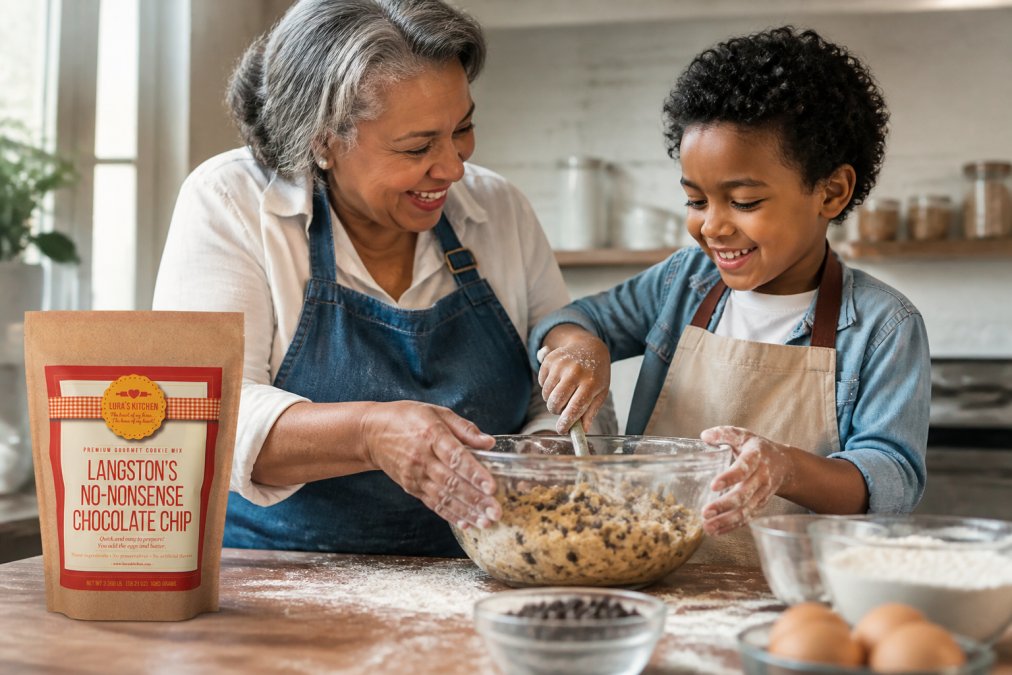
This is the mix that works. Langston's No-Nonsense Chocolate Chip delivers what every kid wants: chewy cookies loaded with real chocolate, no weird aftertaste, no dry crumbles that disappoint.


The recipe is genuinely simple. Kids add eggs and butter to the pre-measured dry mix, stir, scoop, and bake. There's no sifting, no confusing ratios, no "add a pinch of this" moments where children zone out. The semi-sweet chocolate morsels are generous enough that even a 7-year-old notices them in every bite.
What makes this stand out for young bakers: the mix produces consistent results. When a child sees their cookies turn out golden and delicious, they want to bake again. That's the real win.
The retail size at $15.00 is the practical entry point for families testing the waters. It makes 3 to 4 dozen medium to large cookies, which means enough to share, enough for a bake sale, enough to fill the cookie jar for a week. The larger family size ($24.99) is better for serious bakers or group activities.
One honest limitation: this is chocolate chip only. If your child is in a "no chocolate" phase or has a nut allergy concern, you'll need a different mix. But for the majority of kids who love chocolate, this is the reliable choice.
2. Madear's Old Fashion Teacake Mix: Southern Heritage Baking
Teacakes are the underrated cookie. They're soft, buttery, lightly spiced with nutmeg, and they taste like actual tradition instead of a mass-produced afterthought.
Madear's Old Fashion Teacake Mix introduces kids to a baking style that's been part of American culture for generations. The recipe includes warm spices, nutmeg especially, that make the kitchen smell like something real is happening. Children notice. They ask questions. They start understanding that cookies can be more than just chocolate.

The prep is equally straightforward: butter, eggs, and milk mixed into the dry ingredients. The resulting teacakes bake with soft centers and slightly crisp edges, that texture contrast kids find satisfying. At $18.99 for the 16-ounce size, this is a step up in price from the classic chocolate chip, but the flavor justifies it.
What works here for young bakers is the cultural story. If you have family connections to the South, or you're simply exploring different baking traditions, this mix carries actual heritage. The recipe comes from generations of family baking.
The spice profile means this mix teaches kids that baking involves more than sweetness. Nutmeg, vanilla, and butter create complexity. Young palates expand. That's worth something.
The one consideration: teacakes are less familiar to many kids than chocolate chip cookies. Some children will love the warm spice notes. Others might find them unusual on first bite. Taste before committing to multiple batches.
3. Tura Lura's Chocolate Chip Pecan: Premium Flavor for Young Bakers
When a child is ready for more sophisticated flavors, Tura Lura's Chocolate Chip Pecan is the next step.
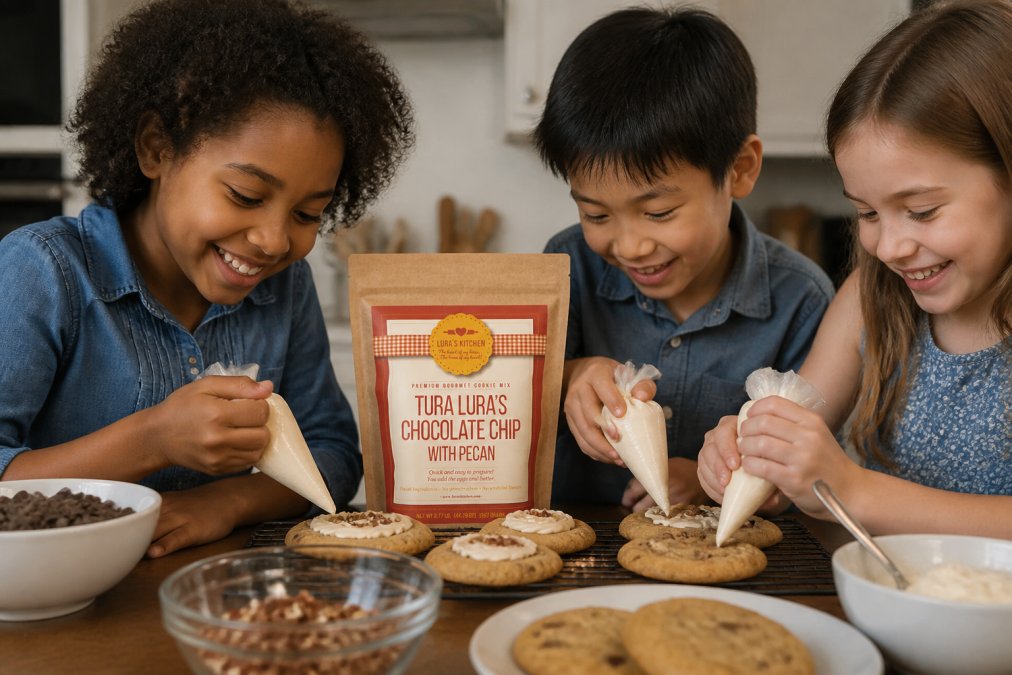
Semi-sweet chocolate meets roasted pecans, pure vanilla, and premium ingredients that produce cookies with actual depth. These aren't simple cookies, they're bakery-quality. A 10-year-old who bakes these feels like they've accomplished something real.
The recipe requires the same basic steps: butter, eggs, and mix. But the result tastes noticeably different from grocery-store alternatives. The pecans add crunch. The chocolate morsels are generous. The vanilla is premium, not that artificial edge some mixes carry.
At $26.99, this is the premium option in the lineup. You're paying for better ingredients and a flavor profile that doesn't compromise. Kids who've already mastered simpler mixes appreciate the upgrade. Parents who want to teach their children that quality ingredients matter will recognize the difference.
The yield is 3 to 4 dozen medium cookies or 2 dozen larger bakery-style cookies. That's enough for a school bake sale, a gift box, or a week of after-school snacks. The generous size means this mix works for both solo bakers and group activities.
What sets this apart: the pecan component. Many kids have never worked with nuts in baking. Pecans are softer than other nuts, less likely to overwhelm young palates, and they add a sophistication that plain chocolate chip can't match.
Easy Baking Activities for Toddlers and Young Children
Baking with toddlers requires a different strategy than baking with older kids. The goal isn't perfect cookies, it's engagement, sensory play, and building confidence.
Toddlers (ages 2-4) benefit from tactile involvement (peer-reviewed research). They want to touch, squeeze, and mix. Pre-measured mixes are perfect because they eliminate the frustration of measuring. A toddler can pour the dry mix into a bowl, add a cracked egg (with your help), and stir. That's a complete activity. They participated. They created something.
The mess is part of the point. Flour on clothes, batter on hands, maybe some on the floor, that's sensory learning. Young children are developing fine motor skills through mixing, pouring, and scooping. Baking mixes designed for simplicity make this possible without overwhelming a parent.
For preschool-age children (ages 4-6), baking becomes more purposeful (the NIH). They can follow two-step instructions. They can understand cause and effect: mix the ingredients, put them in the oven, cookies come out. They're building basic cooking literacy (peer-reviewed research).
The key is choosing mixes that don't require complicated techniques. No folding, no tempering, no precision timing. Langston's No-Nonsense Chocolate Chip and Madear's Old Fashion Teacake Mix both work here because the instructions are genuinely simple.
Set up a dedicated baking station at child height. Use a step stool if needed. Let them scoop, mix, and pour. Yes, some mix will miss the bowl. That's fine. You're teaching process, not perfection.
Mess-Free Baking Recipes for Kids: Setup and Strategy
"Mess-free" is a relative term when kids are involved, but smart setup reduces chaos significantly.
Start by clearing counter space before you begin. Remove unnecessary items. Have wet paper towels ready before you mix anything. This sounds obvious, but most baking disasters happen because parents are scrambling mid-activity instead of prepared beforehand.
Use a large, shallow baking sheet or a rimmed sheet pan under your mixing bowl. When flour or batter spills, and it will, it lands on the sheet instead of your counter. Transfer the sheet to the sink when done. Cleanup takes 30 seconds.
Pre-measure everything into small bowls before the child arrives. Eggs cracked into a cup. Butter softened in a small bowl. This eliminates the "where's the butter" moment mid-activity. It keeps momentum going and prevents frustration.
Use a cookie scoop instead of a spoon. It's faster, produces uniform cookies that bake evenly, and kids find it more satisfying than dropping dough by hand. The mechanical action feels like real work to them.
Wear an apron, both you and the child. It protects clothes and signals that this is a contained activity. When the apron comes off, baking is done. That boundary helps kids understand the scope of the project.
For mixes like Langston's No-Nonsense Chocolate Chip, the dry ingredients are already combined. You're literally mixing three things: dry mix, butter, eggs. That's it. No sifting, no multiple steps, no confusion. The recipe design itself prevents mess.
The real mess-reduction strategy is choosing the right mixes. Complicated recipes with many ingredients create more opportunities for spills. Simple mixes with pre-measured components keep chaos contained. That's why Lura's Kitchen mixes are designed for family baking, fewer components means fewer things to go wrong.
How to Teach Kids to Bake: Building Confidence and Skills
Baking is one of the best ways to teach kids practical life skills. They learn measurement, sequencing, cause and effect, and patience. They also learn that they can create something real.
Start with a clear, simple recipe. Langston's No-Nonsense Chocolate Chip is perfect for this because it has exactly three ingredients to combine. A child can memorize the steps. They can do it again without your help. That independence builds confidence.
Explain each step before you do it. "We're going to pour the mix into this bowl. Then we'll add the butter and eggs. Then we'll stir everything together." Kids who understand what's coming next stay engaged and focused.
Let them do the work. Your job is supervision, not control. Yes, they'll stir slower than you would. Yes, some batter will stick to the outside of the bowl. That's the point. They're learning through doing, not watching.
Celebrate the process, not just the result. "You mixed those ingredients perfectly. Look how smooth that batter is." This teaches kids that effort matters, not just whether the cookies turn out Instagram-worthy.
For older kids (ages 8+), introduce slightly more complex mixes like Madear's Old Fashion Teacake Mix or Tura Lura's Chocolate Chip Pecan. These require the same basic steps but produce more sophisticated flavors. Kids feel like they've leveled up. They have.
Teach the science gently. "The eggs help hold everything together. The butter makes them soft. The heat turns the batter into cookies." You're not teaching chemistry, you're building curiosity about how things work.
The confidence kids build from baking carries into other areas. They've created something tangible. They've followed instructions and achieved a result. They understand that effort produces outcomes. That's foundational.
Conclusion
Baking with kids doesn't require complicated recipes or extensive cleanup if you start with the right mixes. Langston's No-Nonsense Chocolate Chip delivers classic reliability. Madear's Old Fashion Teacake Mix introduces children to Southern baking heritage. Tura Lura's Chocolate Chip Pecan offers premium flavor for young bakers ready to expand their palate.
The real difference these mixes make is freedom, freedom for kids to participate meaningfully, freedom for parents to enjoy the activity instead of dreading the cleanup, freedom to build memories around something homemade and real.
When you choose baking mixes from Lura's Kitchen, you're choosing recipes designed specifically for family participation. Every mix is crafted to work reliably, taste genuinely good, and keep the focus on the experience instead of the mess. Whether it's your first time baking with children or you're a seasoned family baker, these mixes make it simple to create something worth sharing.
Start simple. Let kids mix. Celebrate what they create. That's it's all in the mix, the ingredients, the process, the people gathered around the kitchen. Shop Lura's Kitchen and bring homemade baking back to your family.
Frequently Asked Questions
Q: What is the easiest baking mix for kids to use?
A: Baking mixes that require only eggs and butter are the simplest for children. Langston's No-Nonsense Chocolate Chip and Madear's Old Fashion Teacake Mix both follow this straightforward formula, eliminating the need for multiple ingredients or complex measurements. Kids can focus on mixing and baking rather than ingredient prep, making the process faster and less overwhelming for young bakers building confidence.
Q: How can I make baking with kids less messy?
A: Set up a dedicated baking station with pre-measured ingredients in small bowls, use a silicone mat under mixing bowls to catch spills, and assign each child one specific task (mixing, pouring, or decorating). Pre-made baking mixes reduce the number of containers and measurements, cutting cleanup significantly. Keep damp cloths nearby and use aprons or old shirts. Baking mixes for kids that require minimal additional ingredients naturally reduce the mess compared to baking from scratch.
Q: Are there healthy baking mix options for children?
A: Madear's Good Trouble and Purple Sweet Potato Teacake Mixes offer nutrient-rich ingredients including sweet potato, which adds natural vitamins and fiber. These options provide a more wholesome choice than standard mixes while maintaining kid-friendly flavors. Jerry's Spiced Oatmeal Raisin uses hearty oats and raisins, adding whole grains and natural sweetness. Always check ingredient lists for artificial preservatives and opt for mixes with recognizable, simple ingredients.
Q: What age is best for starting baking activities with kids?
A: Children as young as 2-3 years can participate in simple baking tasks like stirring pre-measured ingredients or pressing buttons on an oven. Ages 4-6 can help mix, pour (with supervision), and shape dough. By age 7-8, most kids can follow multi-step instructions and handle more responsibility. Baking mixes designed for kids make these activities accessible across age groups since they skip complicated measurements and reduce prep time, allowing you to focus on the fun and learning.
Related Resources:
For more on teaching children cooking skills, the American Academy of Pediatrics offers guidance on age-appropriate kitchen activities.
Parents seeking nutritional information about baking ingredients can reference USDA nutrition databases for ingredient composition.
For oven safety standards and best practices, the Consumer Product Safety Commission provides detailed guidelines.
This article was written using GrandRanker