

Table of Contents
- What Makes Minority Owned Food Brands Different
- Economic Impact of Minority Owned Businesses
- How Supply Chain Equity Strengthens Communities
- Benefits of MWBE Certification for Food Suppliers
- How to Find Minority Owned Food Brands
- Closing the Racial Wealth Gap Through Food
- Why Your Choice Matters
Last Updated: August 26, 2026
What Makes Minority Owned Food Brands Different
Minority owned food brands carry something mass-produced cookies never will: a story rooted in heritage, resilience, and intentional craftsmanship. These aren't just products on a shelf, they're expressions of cultural pride and economic empowerment that ripple through communities in ways that go far beyond a single purchase.
When you choose minority owned food, you're buying into a fundamentally different business model. These brands often emerge from family recipes passed down through generations, recipes that carry the weight of history and the warmth of home kitchens. Unlike corporate giants that optimize for shelf stability and cost reduction, minority-owned food companies frequently prioritize quality ingredients, authentic flavor profiles, and transparent sourcing. They're built by founders who have something to prove and a community they're accountable to.
The difference shows up in how these businesses operate. Many minority owned food brands maintain direct relationships with their suppliers, often sourcing from other minority-owned agricultural operations. This creates what's known as supply chain equity, a conscious effort to keep dollars circulating within communities that have historically been locked out of mainstream commerce. It's an intentional choice that costs more and requires more coordination, but it's exactly what builds economic resilience.
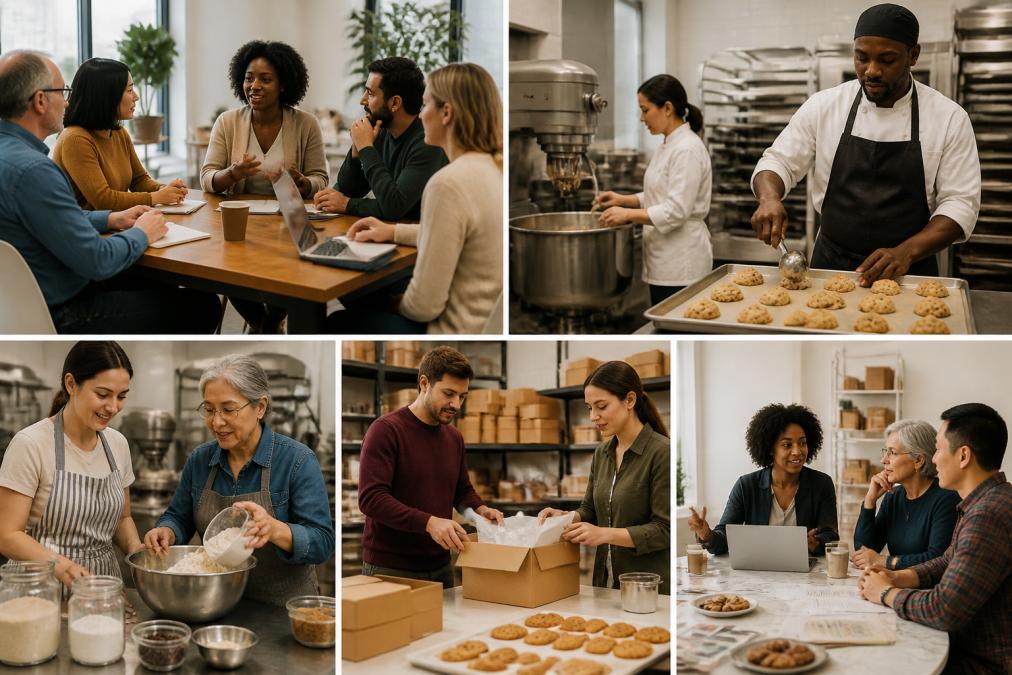
Lura's Kitchen exemplifies this approach. As a woman-majority, minority-owned benefit corporation, they've built their business around the idea that food is more than nutrition, it's legacy. Their teacake mixes and cookie blends draw from Southern baking traditions, recipes that carry cultural weight and generational memory. When you bake with Lura's Kitchen mixes, you're not just making dessert; you're participating in a tradition of inclusive entrepreneurship and community care.

Economic Impact of Minority Owned Businesses
Supporting minority owned food creates measurable economic impact that extends far beyond the initial transaction. When you purchase from these businesses, you're directly funding entrepreneurs who often face systemic barriers to capital, market access, and distribution networks that their white counterparts navigate more easily.
The economic empowerment piece is crucial. Minority-owned food businesses generate revenue that stays within communities, funding jobs, supporting local suppliers, and creating pathways for other entrepreneurs. Many of these founders reinvest profits back into their operations, hire from their neighborhoods, and mentor the next generation of food entrepreneurs. This creates what economists call "economic mobility", the ability for families to build wealth across generations.
Consider the practical mechanics: when a minority-owned food brand succeeds, the owner can hire employees, pay competitive wages, and provide benefits. Those employees spend money locally, supporting other businesses. The brand purchases ingredients from suppliers, some of whom are also minority-owned. The revenue generated becomes available for business expansion, research into new products, and community investment. It's a multiplier effect that corporate food chains simply don't create.
The data on firm performance shows that minority-owned businesses that reach scale often outperform their projections once they gain market access. The barrier isn't competence or product quality, it's distribution and capital. When these barriers drop, growth accelerates. This is why certification and visibility matter so much.
How Supply Chain Equity Strengthens Communities
Supply chain equity sounds like corporate jargon, but it's actually about something fundamental: ensuring that the money spent on food actually benefits the people growing, processing, and distributing it.
Most food supply chains are structured to extract value at every step. A farmer grows the crop for pennies per pound. A distributor buys it cheap, marks it up. A processor adds their margin. A retailer adds theirs. By the time the product reaches you, the farmer who grew the ingredient has seen almost no benefit. This is the system that created food deserts, neighborhoods where fresh, quality food is unavailable because the economics don't work for retailers.
Minority-owned food businesses often restructure this chain intentionally. They work directly with suppliers, pay fair prices, and build relationships instead of transactions. Some source from other minority-owned farms and producers, creating what's called "vendor diversity" within their own supply networks. This isn't charity, it's strategic business that strengthens the entire ecosystem.
When supply chains are equitable, communities see tangible benefits. Local farmers can invest in better equipment and sustainable practices. Processing facilities stay open and hire locally. Distribution becomes possible for smaller producers who couldn't afford traditional logistics. Food justice, the idea that everyone deserves access to nutritious, culturally relevant food, becomes achievable because the economics actually work.
Sustainable sourcing becomes possible when you're not racing to the bottom on price. Minority-owned food brands often prioritize regenerative agriculture, fair labor practices, and environmental stewardship because their business model isn't built on extraction. They're building for longevity, not quarterly returns.
Benefits of MWBE Certification for Food Suppliers
MWBE stands for Minority and Women Business Enterprise. Certification isn't just a badge, it's a key that unlocks access to procurement opportunities, corporate partnerships, and government contracts that would otherwise be closed.
Here's what certification actually does: it creates a verified, transparent way for large organizations to meet their own diversity and inclusion commitments. Many corporations have stated goals around spending with minority-owned suppliers (sba.gov). Many government agencies are required by law to allocate a percentage of their procurement budget to certified minority-owned businesses (sba.gov). Without certification, there's no way to prove your status, and you can't access these opportunities.
For food suppliers specifically, MWBE certification opens doors to institutional buyers, schools, hospitals, corporate cafeterias, government agencies. These are high-volume, consistent customers that can transform a small business into a scalable operation. A minority-owned bakery mix company with MWBE certification can bid on school lunch contracts or corporate cafeteria supply agreements that might represent thousands of units annually.
The certification process itself requires documentation: proof of ownership, financial statements, operational details. It's work, but it's also valuable because it forces you to formalize your business and build credibility with potential partners. Once certified, you gain access to databases that corporate procurement teams use specifically to find minority-owned suppliers. independent family-run businesses.
Beyond procurement, certification signals quality and legitimacy to consumers. When someone sees an MWBE certification on a product, they know the business has been verified by a third party. They know the ownership structure is real. This matters because skepticism is reasonable, many brands make diversity claims without substance. Certification cuts through that.
How to Find Minority Owned Food Brands
Finding authentic minority-owned food brands requires a bit of intentional effort, but the process is becoming easier as these businesses gain visibility and distribution.
Start with direct research. Most minority-owned food companies have clear messaging about their ownership and mission on their websites and packaging. Look for explicit statements about the founder's background, the company's benefit corporation status, or MWBE certification. Legitimate businesses are transparent about this because it's central to their identity.
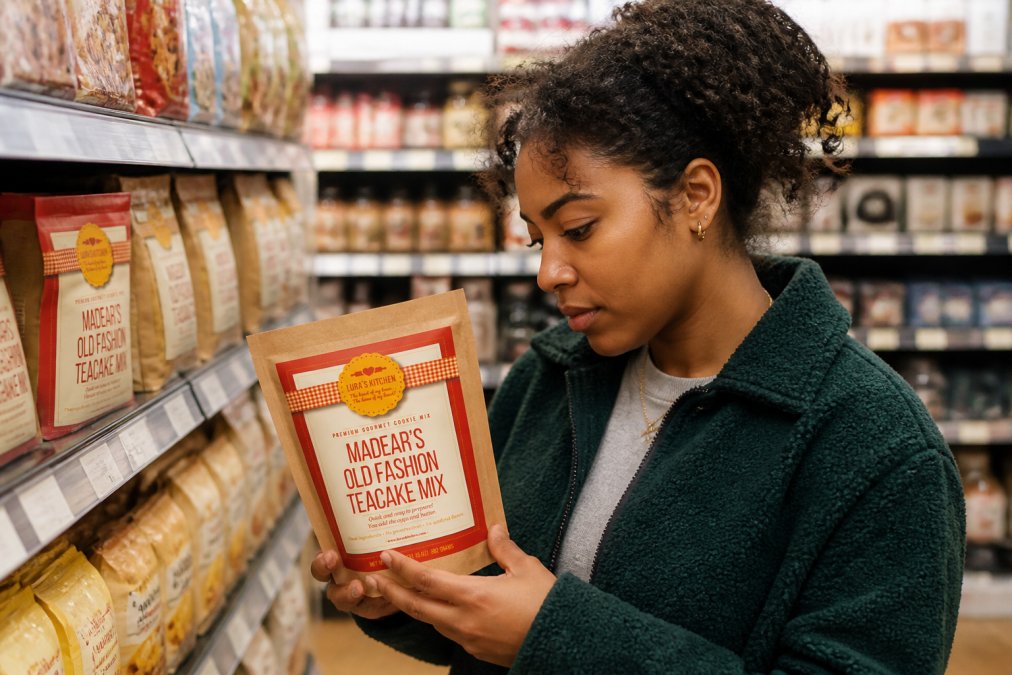
Online marketplaces have become crucial distribution channels. Many minority-owned food brands sell through specialized platforms that aggregate products from underrepresented founders. These platforms often filter by certification status, making it easy to verify claims. You can also search directly for "MWBE certified food" or "minority-owned food brands" and find curated directories.
Check the label itself. Look for:
- Founder name and story (often printed on packaging)
- MWBE or other certification logos
- "Minority-owned," "woman-owned," or "benefit corporation" statements
- Sourcing information that indicates intentional supply chain practices
- Ingredient lists that show quality and transparency
Ask questions directly. Reach out to brands on social media or through their websites. Authentic minority-owned food companies love talking about their mission and their story. If you get generic corporate responses or evasion, that's a signal.
Community networks matter too. Local food co-ops, community organizations, and cultural centers often feature minority-owned food products. These spaces curate intentionally and can point you toward authentic brands. Word-of-mouth recommendations from community members carry weight because they come from people invested in supporting their own.
Lura's Kitchen offers an example of how transparent minority-owned brands operate. Their product pages and marketing clearly communicate their status as a woman-majority, minority-owned benefit corporation. They're not hiding it, it's central to their story. You can verify their commitment by looking at their ingredient sourcing, their community engagement, and their business structure.
Closing the Racial Wealth Gap Through Food
This is where the conversation moves from individual purchases to systemic impact. The racial wealth gap, the difference in accumulated assets between white families and families of color, is one of the most persistent economic inequalities in the country (federalreserve.gov). Food entrepreneurship is one of the most accessible pathways to wealth building for underrepresented founders.
When minority-owned food businesses succeed, they create assets. A founder who builds a profitable food company has created something of value, inventory, customer relationships, brand equity, operational systems. These assets can be sold, passed to heirs, or used as collateral for expansion. This is how wealth accumulates across generations.
The barrier to entry in food entrepreneurship is lower than many industries. You don't need a medical degree or a law license. You need a good recipe, some capital, and access to distribution. The problem is that access to capital has been systematically restricted for entrepreneurs of color. Banks are less likely to approve loans. Venture capital overwhelmingly funds white male founders. Family wealth, the typical source of startup capital, is lower in communities that faced decades of discriminatory lending practices.
When you support minority-owned food brands, you're participating in wealth building. You're helping entrepreneurs access the capital they need to scale. You're creating proof points that demonstrate the viability of these businesses, which makes it easier for the next entrepreneur to secure funding. You're building a market that attracts investment and attention.
Economic mobility depends on opportunity. Food entrepreneurship is one of the most accessible opportunities for founders from underrepresented backgrounds. Supporting these businesses isn't charity, it's recognizing that these entrepreneurs have viable products, solid business models, and the capacity to build generational wealth if given fair market access.
Why Your Choice Matters
Every purchase is a vote. It's a signal to the market about what you value, who you want to support, and what kind of economy you want to build.
When you choose minority-owned food brands, you're not just buying a product. You're choosing to support entrepreneurs who are building businesses despite systemic barriers. You're participating in supply chain equity by funding operations that intentionally distribute opportunity. You're contributing to food justice by supporting businesses that prioritize access and quality. You're helping close the racial wealth gap by creating pathways to generational wealth.
The cumulative impact of individual choices becomes visible at scale. When enough consumers prioritize minority-owned food, distribution improves. When distribution improves, more minority entrepreneurs can enter the market. When more entrepreneurs enter, competition and innovation increase. The market transforms from within.
This isn't abstract impact. It's concrete: jobs created, communities strengthened, entrepreneurs funded, families building wealth. It's recipes preserved and cultural traditions honored. It's the recognition that food is never just food, it's identity, heritage, and economic power.
Your choice matters because it's part of a larger movement toward inclusive economic systems where opportunity isn't determined by the color of your skin or the wealth of your family. It's recognizing that the best food, the most authentic flavors, and the most compelling stories often come from the entrepreneurs who've been historically excluded from mainstream markets.
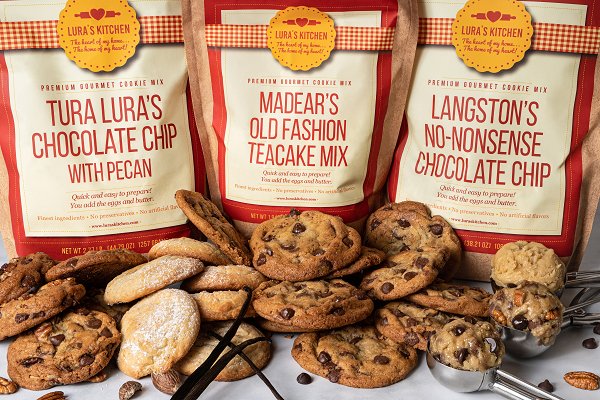
Supporting minority owned food brands is one of the most direct ways to build equitable economic systems. Every purchase funds entrepreneurs, strengthens communities, and creates opportunity. Lura's Kitchen represents exactly this model, a woman-majority, minority-owned benefit corporation creating premium baking mixes that honor Southern heritage while building economic empowerment. When you choose brands like Lura's Kitchen, you're not just getting exceptional products; you're investing in a future where entrepreneurship and wealth building are truly accessible. Because when it comes to food, community, and economic justice, it's all in the mix.
Frequently Asked Questions
What are the economic benefits of supporting minority-owned food businesses?
Supporting minority-owned food brands directly strengthens local economies by keeping revenue within underrepresented communities. These businesses reinvest profits into job creation, vendor diversity, and local entrepreneurship. When you purchase from minority-owned food companies, you help close the racial wealth gap and build generational economic stability. Community investment is a measurable outcome of your purchasing decision.
How can consumers identify and verify minority-owned food companies?
Look for official certifications like MWBE (Minority and Women-Owned Business Enterprise) designations on product packaging or company websites. Reputable minority-owned food brands clearly state their mission and ownership structure. You can verify certification through your state's procurement office or the National Minority Supplier Development Council. Brands like Lura's Kitchen prominently display their status as a woman-majority, minority-owned benefit corporation, making verification straightforward and transparent.
What is MWBE certification and why does it matter for food suppliers?
MWBE certification formally recognizes businesses owned and controlled by minorities and women. For food suppliers, this certification opens doors to corporate procurement contracts, government purchasing opportunities, and supply chain partnerships that might otherwise be unavailable. It signals commitment to inclusive business practices and allows companies to compete for contracts reserved for diverse vendors. MWBE certification also builds credibility with socially conscious consumers who prioritize supporting equitable businesses.
How does shopping at minority-owned food brands impact local communities?
Purchasing from minority-owned food brands creates a multiplier effect in communities. Revenue stays local, funding schools, small businesses, and neighborhood development. These businesses often source from local suppliers, further strengthening community supply chains. Job creation, mentorship opportunities, and entrepreneurial growth follow. Additionally, minority-owned food brands often preserve cultural heritage and traditional recipes, maintaining food justice and cultural identity within their communities.
This article was written using GrandRanker