
Table of Contents
- What Makes a Cookie Mix Premium?
- Premium Cookie Mixes vs. Standard Mixes: Ingredient Comparison
- The Real Cost of a Homemade Cookie
- How to Improve Store Bought Cookie Mix for Bakery Results
- The Best Premium Baking Kits for Home Bakers
- Common Mistakes That Ruin Premium Cookie Mixes
- Conclusion: Why Quality Mixes Earn Their Place
- Frequently Asked Questions
Last Updated: September 7, 2026
Premium cookie mixes matter because they replace the flat, cake-like texture of standard supermarket mixes with the rich, chewy results of scratch baking, all without the measuring and cleanup. The difference comes down to ingredient quality, fat content, and the care taken in formulation. At Lura's Kitchen, we've spent generations perfecting legacy recipes that prove a mix can deliver homemade taste, and this guide breaks down exactly what separates a premium product from the rest.
Here's the honest truth most guides miss: the cookie mix aisle is crowded with products that share nearly identical ingredient lists, yet they bake into completely different cookies. The gap between a standard mix and a premium one isn't marketing, it's baking chemistry. Fat content, leavening agents, and moisture retention decide whether you get a golden-brown, melt-in-your-mouth cookie or a dry, crumbly disk. Below, we'll show you what to look for on the label, what you're actually paying for, and how to elevate any mix into something bakery-worthy.
What Makes a Cookie Mix Premium?
A premium cookie mix is defined by whole ingredients that behave predictably in the oven, not by fancy packaging or a higher price tag. When you open a quality mix, you should recognize every component: real chocolate morsels, pure vanilla, and a carefully balanced ratio of fats and flours. Standard mixes often rely on shelf-stable additives and emulsifiers to cut costs, which changes the crumb structure and flavor profile.
What most shoppers don't realize is that the fat-to-flour ratio is the single biggest predictor of texture. Premium mixes typically use a butter-to-oil ratio that encourages spreading and chewy edges, while budget options lean on hydrogenated oils that hold their shape but taste flat. The result is a cookie that looks fine but lacks the depth and mouthfeel of something baked with intention.
Premium Cookie Mixes vs. Standard Mixes: Ingredient Comparison
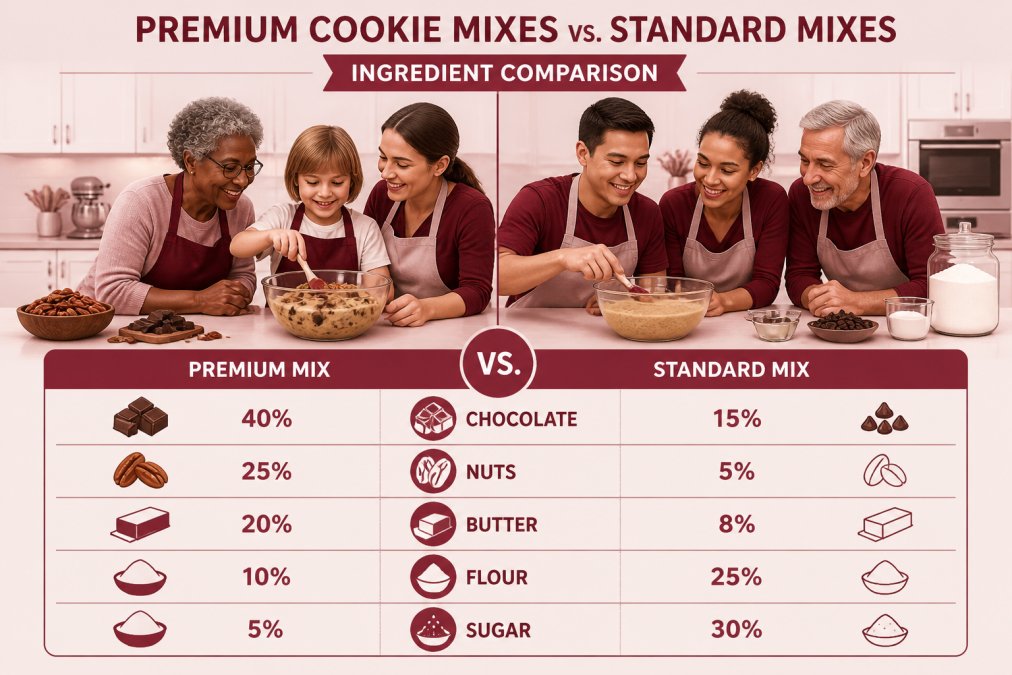
The clearest way to see why premium cookie mixes matter is to set two ingredient lists side by side. A standard mix often leads with enriched flour, sugar, and partially hydrogenated oil, followed by a long list of preservatives. A premium mix leads with real butter or buttermilk powder, organic flour, and inclusions like chopped pecans or semisweet morsels that you can actually see.
| Ingredient Role | Standard Mix | Premium Mix | Why It Matters |
|---|---|---|---|
| Fat Source | Hydrogenated oil | Real butter or buttermilk powder | Butter has a lower melting point, which allows the cookie to spread properly before setting, creating a chewy texture. Hydrogenated oils stay solid longer, leading to a denser, less flavorful crumb. |
| Flour Type | Enriched, bleached wheat flour | Unbleached, often organic flour | Bleached flour is treated with chemicals that weaken its protein structure, resulting in a softer, less structured cookie. Unbleached flour retains its natural protein, providing the structure needed for a satisfying bite. |
| Flavoring | Artificial vanilla | Pure vanilla extract | Artificial vanilla is a single compound (vanillin), while pure vanilla extract contains hundreds of flavor compounds that add depth and complexity, making the chocolate or spices taste richer. |
| Inclusions | Tiny, uniform chips | Generous morsels, nuts, oats | The size and quality of inclusions affect the texture. Large chocolate chunks melt into pools, while small chips just dot the surface. Nuts add crunch and healthy fats that improve mouthfeel. |
| Additives | Preservatives, emulsifiers | Minimal, clean-ingredient list | Preservatives like calcium propionate can impart a slightly bitter taste and affect the texture. Emulsifiers are used to mix water and oil, but they can make the dough tough and the final cookie cakey. |
The Science of Fat and Moisture Retention
Fat does more than add flavor; it controls how moisture moves through the dough during baking. Higher-quality fats, like butter, coat the flour proteins more evenly, limiting gluten development and producing a tender, melt-in-your-mouth crumb. Standard mixes with lower fat content or hydrogenated oils often bake into cookies that dry out within hours.
Moisture retention also depends on the type of sugar used. Brown sugar, which contains molasses, is hygroscopic, meaning it pulls in and holds moisture from the air. Premium mixes frequently combine brown and white sugar to achieve that soft center with lightly crisp edges, a texture contrast that signals quality in every bite. Standard mixes that rely solely on white sugar will produce a cookie that is crisp all the way through and goes stale faster.
Leavening Agents and Flavor Balance
Leavening agents determine oven spring, the initial rise that happens before the structure sets. Standard mixes often over-rely on baking soda alone, which produces a flatter, denser cookie. Baking soda requires an acid to activate, and if the mix doesn't have enough, the reaction is incomplete. Premium formulations balance baking soda with baking powder, which contains its own acid, to create a consistent lift without spreading too thin.
Flavor balance is where premium mixes truly separate themselves. A good mix layers sweetness against salt and vanilla so the chocolate or spices stand out rather than tasting one-note. The salt isn't just for flavor; it also strengthens the gluten network and controls the yeast activity. This is why two mixes with nearly identical ingredient lists can produce wildly different results, the proportions matter as much as the components.
The Real Cost of a Homemade Cookie
Most guides stop at taste, but the most practical question for a home baker is value: what are you actually paying per cookie, and what are you getting for that price? A simple cost-per-cookie analysis reveals why premium mixes are often the smarter investment, both for your wallet and your time.
Let's break down the math. A standard supermarket mix might yield 24 small, thin cookies. On the surface, that seems unbeatable. However, consider the yield and the quality. Those 24 cookies are often 2 inches across, dry by the next day, and require you to add your own egg and oil, which adds to the true cost.
A premium mix, by contrast, is designed to produce a larger, more satisfying cookie. For instance, a 1.9-pound family-size premium mix might yield 18 to 20 substantial, 3-inch cookies. The price per unit is higher, but the value proposition is entirely different.
Here's the cost-per-cookie comparison that matters:
| Factor | Standard Mix | Premium Mix | Scratch Baking |
|---|---|---|---|
| Upfront Cost | $3.00 | $15.00 - $27.00 | $25.00+ (for all ingredients) |
| Yield | 24 small cookies | 18-20 large cookies | 24-36 cookies (varies) |
| Cost per Cookie | ~$0.13 | ~$0.75 - $1.50 | ~$0.70 - $1.00 |
| Add-ins Required | Egg & Oil | None | All |
| Ingredient Waste | Minimal | Minimal | High (leftover flour, buttermilk, etc.) |
| Time Investment | 20 min prep | 20 min prep | 45+ min prep & cleanup |
| Result | Flat, cake-like, dry by day 2 | Thick, chewy, stays fresh for days | Variable, depends on skill |
The hidden cost of scratch baking is waste. Buying ingredients for one batch of cookies can lead to surplus. Unless you bake frequently, some ingredients might sit in your pantry and eventually expire. A premium mix consolidates that cost into a single package with zero waste, delivering the high-quality ingredients you want without the surplus.
This analysis reveals the true value proposition: premium mixes are not about the cost per cookie, but the cost per great cookie. You are paying for a guaranteed outcome, a superior texture, and the convenience of having a bakery-quality dessert ready in under 30 minutes. For the baker who values their time and their reputation, that is a trade-off worth making every time.
How to Improve Store Bought Cookie Mix for Bakery Results
If you already have a standard mix on hand, you can still improve store bought cookie mix with a few simple adjustments. The goal is to mimic the fat and moisture profile of a premium product without starting from scratch.
- Swap the water for milk or buttermilk to add richness and tenderness.
- Replace the oil with melted butter, using the same measurement.
- Add one extra egg yolk to boost chewiness and fat content.
- Chill the dough for at least 30 minutes before baking to deepen flavor.
- Sprinkle flaky sea salt on top before baking to balance sweetness.
- Underbake by two minutes, pulling cookies when the edges are golden-brown but the centers still look soft.
These tweaks address the two biggest failures of standard mixes: dry texture and flat flavor. The butter and extra yolk restore the fat content, while chilling develops the dough consistency that produces a better oven spring.
The Best Premium Baking Kits for Home Bakers
When you want guaranteed results without the guesswork, the best premium baking kits combine quality ingredients with foolproof instructions. These aren't just mixes; they're complete experiences designed for family participation and consistent outcomes.
Tura Lura's Chocolate Chip Pecan
Tura Lura's Chocolate Chip Pecan is our top pick for anyone who wants a showstopper cookie with minimal effort. This mix delivers rich chocolate morsels, buttery pecans, and a soft, chewy texture that holds up for days. It's ideal for bake sales, church gatherings, and corporate gifting, and the recipe is simple enough for kids to help with.
Madear's Old Fashion Teacake Mix
Madear's Old Fashion Teacake Mix honors Southern baking traditions with a soft, buttery teacake that tastes like a family heirloom. This mix is perfect for those who prefer a less sweet, more nostalgic cookie that pairs beautifully with coffee or tea. The 1.9-pound family-size package makes plenty of cookies to share.
Langston's No-Nonsense Chocolate Chip
Langston's No-Nonsense Chocolate Chip keeps things simple: a classic chocolate chip cookie with pure vanilla and a lightly golden finish. It's the everyday option that delivers consistent results, making it a favorite for fundraising and family gatherings where batch consistency matters.
Common Mistakes That Ruin Premium Cookie Mixes
The most common mistake with any cookie mix, premium or not, is overmixing the dough. Once you add the wet ingredients, mix just until combined. Overworking the dough develops gluten, which creates tough, cake-like cookies instead of tender, chewy ones.
Another frequent error is baking at the wrong temperature. Premium mixes are formulated for specific oven conditions, usually 350°F, and deviating by even 25 degrees changes the spread and texture. Always preheat fully and consider an oven thermometer, since many home ovens run hot or cold.
Do not substitute ingredients unless the package says you can. Premium mixes are carefully balanced, and swapping in a different fat or flour type can throw off the entire baking chemistry, leaving you with cookies that spread too thin or never set.
Conclusion: Why Quality Mixes Earn Their Place
Premium cookie mixes matter because they respect your time and your taste buds. They deliver the texture, flavor, and aroma of scratch baking while eliminating the mess and guesswork, making them worth the higher price for anyone who bakes regularly. Whether you're baking with a six-year-old who wants to help or preparing dozens of cookies for a fundraiser, a quality mix ensures every batch turns out right.
The best way to experience the difference is to try a Lura's Kitchen mix yourself. As a multi-generational, woman-majority, and minority-owned benefit corporation, we craft legacy-inspired recipes designed to be simple, fun, and mess-free. Shop our collection and taste why It's all in the mix. Get started with Lura's Kitchen and bake cookies worth sharing.
Frequently Asked Questions
What makes a cookie mix considered premium?
Premium cookie mixes use higher-quality ingredients like real butter, pure vanilla, and generous chocolate morsels. They often avoid artificial preservatives and rely on proper leavening agents for a better crumb structure. The result is a softer, chewier texture and a more balanced flavor profile that mimics scratch baking. Standard mixes may use lower-cost fats and artificial flavors, which change both taste and texture.
Can premium cookie mixes save time without sacrificing flavor?
Yes. A premium mix eliminates the need to measure and source multiple dry ingredients, cutting prep time to minutes. You still add butter and an egg, but the blend of flours, leavening agents, and flavorings is already balanced. This reduces the risk of overmixing or adding too much flour, which often ruins texture. You get consistent, bakery-style cookies without the guesswork.
How can you tell the difference between standard and premium cookie mixes?
Read the ingredient label. Premium mixes lead with recognizable items like unbleached flour, sugar, and real chocolate. Standard mixes often list artificial flavors, preservatives, and lower-cost fats. The instructions also differ: premium mixes usually ask you to add butter and an egg, while standard ones may only need water and oil. The fat content and butter-to-oil ratio directly affect whether cookies spread properly and turn golden-brown.
Does it matter what order you mix ingredients for cookies?
Yes. The order affects dough consistency and final texture. Creaming butter and sugar first incorporates air, which contributes to a lighter crumb. Adding the egg next builds emulsion and moisture retention. If you dump everything together, you risk overworking the flour, which develops too much gluten and makes cookies tough. Premium mixes often include instructions that follow proper technique, helping you get the right result every time.