

Last Updated: November 13, 2026
Quick Summary
To keep desserts fresh during outdoor events, shield them from direct sun and heat, store them in a cooler with gel packs and sealed containers, and serve in small batches. Buttercream, whipped cream and custard should be replaced after about one hour when it is above 90°F.
- Sun and heat do most of the damage, so plan the whole setup around shade and cold.
- Use a hard-sided cooler with a gasketed lid for backup desserts and keep it closed.
- Freeze gel packs flat so they stack against container walls, not on top of desserts.
- Cut the holding window to one hour for dessert above 90°F, versus two hours in mild weather.
- Whipped cream and custard have the shortest safe window and should move back to the cooler first.
Table of Contents
- Why Desserts Spoil Faster Outdoors
- Essential Tools for Keeping Desserts Fresh Outside
- How to Keep Cake Cool Outside Without a Refrigerator
- How Long Can Desserts Sit Out at an Outdoor Event?
- Best Desserts for Hot Weather Events
- How to Transport Desserts to a Party Safely
- Setting Up Your Dessert Table for Your Next Outdoor Event
- Frequently Asked Questions
Why Desserts Spoil Faster Outdoors
Warm air, direct sunlight, and bugs can turn a tray of treats into a sticky mess in an hour, so knowing how to keep desserts fresh starts with understanding what goes wrong. Heat speeds up melting in frosting and softens cookies. Dessert tables at outdoor events face all three problems at once.
The good news is that you can protect your desserts with a little planning. Below, we'll show you exactly how to keep your treats fresh from the car to the last bite.
Keep this in mind: sun and heat do most of the damage, so plan your whole setup around shade and cold.
Essential Tools for Keeping Desserts Fresh Outside
You don't need a commercial kitchen to keep desserts fresh outdoors, but the gear you choose determines how long your treats hold up. The right setup pairs insulation, cold sources, and shade so each piece of equipment does one job well.
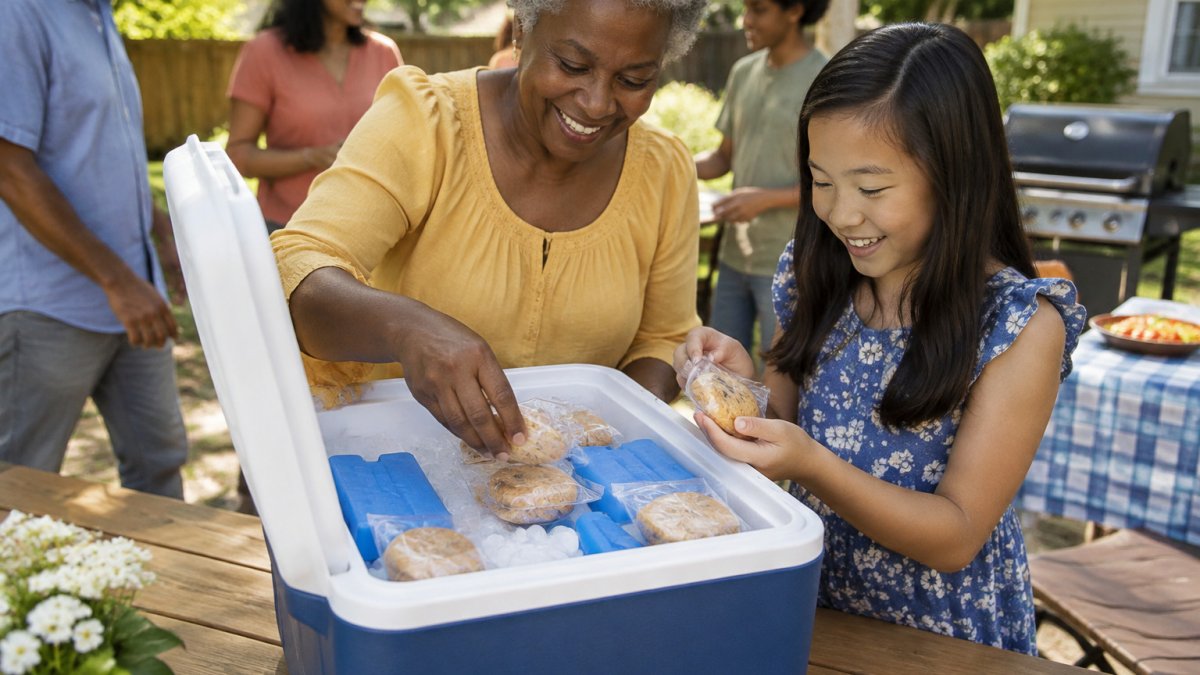
Coolers and insulated carriers. A hard-sided cooler with a gasketed lid holds cold air best for large trays and sheet cakes. Soft-sided insulated carriers are lighter and easier to carry to a picnic table, but they lose cold faster once opened. A common pattern is to use one hard cooler for backup desserts that stays closed and one soft carrier for the items you are actively serving. Match cooler size to volume: an oversized cooler full of empty air warms faster than a tightly packed one, so fill gaps with extra ice packs or rolled towels.
Cold sources. Reusable gel packs stay cold longer than loose ice and won't leave meltwater on your packaging. Block ice lasts longer than cubed ice if you use ice at all. Freeze gel packs flat so they stack against container walls rather than sitting on top of desserts, where their weight can crush frosting.
Containers and packaging. Food-safe containers with snap-on lids protect against humidity, bugs, and condensation drip. Rigid cake boxes with a fitted lid beat open trays for anything frosted. Individually wrapped cookies and teacakes create their own barrier and let guests serve themselves without exposing the whole batch.
Shade and airflow. A pop-up canopy or a large umbrella blocks direct sun, which does more damage than air temperature alone. A small battery-powered fan moves air across the table and helps slow condensation buildup on chilled items. Point the fan so it circulates air around the table, not directly onto unwrapped desserts.
Table and serving gear. Use shallow pans or trays that sit over a layer of ice packs rather than in melting ice. Keep a stack of clean towels on hand to wipe condensation before it drips onto packaging. Tongs and a small sign for each dessert reduce handling and keep the setup tidy.
A simple capacity guide. For a two-hour event in mild weather, one hard cooler with two frozen gel packs per tray is usually enough for a dozen servings. For a four-hour event above 85°F, double the gel packs and plan a backup cooler that stays closed until you need to replenish. Bring one more cold source than you think you need; unused packs cost nothing and running short does.
Watch out: opening a cooler every few minutes to grab a treat drains cold air fast, so set out a small batch and leave the backup cooler sealed.
How to Keep Cake Cool Outside Without a Refrigerator
Many people search for how to keep cake cool outside when no fridge is nearby. The answer comes down to shade, insulation, and cold packs.
Follow these steps:
- Place the cake in a sturdy container and seal it.
- Set the container inside a cooler with ice packs around it, not directly on top.
- Keep the cooler in the shade, away from the car's hot interior.
- Open the cooler only when you need to serve.
Buttercream and cream-cheese frosting hold their shape longer in a cool spot. Avoid stacking heavy items on top of a cake, because the weight can smear the frosting.
How Long Can Desserts Sit Out at an Outdoor Event?
The two-hour rule is the standard starting point: perishable foods, including desserts with dairy, cream, custard, or cream cheese, should not sit in the temperature danger zone between 40°F and 140°F for more than two hours. When the air temperature is above 90°F, cut that window to one hour. These limits come from widely published food-safety guidance, and they apply to your dessert table just as they do to potato salad.
Dessert-specific holding times. Not every dessert carries the same risk. Use this breakdown to plan how long each item can stay out:
- Buttercream-frosted cakes and cupcakes: about two hours in mild weather, one hour above 90°F. Buttercream softens and can slump as it warms.
- Whipped cream and cream-cheese frostings: the shortest window, roughly one hour in heat. These are the first items to move back to the cooler.
- Custards, puddings, and cream pies: treat like whipped cream, one hour in heat and two hours at most in mild conditions.
- Chocolate-glazed or chocolate-decorated items: chocolate blooms and softens above about 75°F to 80°F, so keep them shaded even when the food-safety clock is not the issue.
- Fruit-filled pies and tarts: fresh fruit fillings weep and soften; keep them chilled and serve in small batches.
- Cookies, brownies, bars, and teacakes: the most forgiving category. They hold at room temperature for the length of most events, though they still do best in shade and away from humidity.
A replenishment workflow that works. Set a timer the moment dessert goes out. When it sounds, swap the tray for a fresh one from the cooler and move the old tray back into cold storage or discard it if it has passed its window. Serve in small batches so the backup stays sealed. Assign one person to check the table every 30 minutes and to remove anything that looks warm, melted, or soft.
Temperature checks. A simple instant-read thermometer takes the guesswork out of holding temperatures. Check the surface of chilled desserts and the interior of the cooler; if the cooler is drifting above 40°F, add cold packs or move it to deeper shade. Keep the thermometer in the cooler so it is always at hand.
When in doubt, throw it out. If a dessert has been out past its window, looks or smells off, or has been sitting in direct sun, do not put it back in the cooler to serve later. The cost of one tray is small compared with the risk to guests.
Watch out: a folding table in direct sun can run far hotter than the air temperature, so shade the table itself, not just the food, and rotate trays so nothing sits in a hot spot for the whole event.
Best Desserts for Hot Weather Events
Some desserts handle heat far better than others. Choose treats that are sturdy, sealed, and easy to share:
- Individually wrapped teacakes, which stay fresh in their own packaging
- Cookies that hold their shape at room temperature for short periods
- Bars and brownies cut into portions before serving
- Sheet cakes kept chilled until serving time
Skip desserts with whipped toppings, custard, or fresh fruit for an outdoor setting unless you can keep them cold the whole time. Lura's Kitchen mixes make bake-at-home cookies for easy sharing.
How to Transport Desserts to a Party Safely
Transport is where many desserts get ruined before the event even starts. Plan the drive the same way you plan the table.
- Pack desserts in a cooler with ice packs, then place the cooler in the car's cabin, not the trunk.
- Keep the air conditioning running, or put the cooler in the back seat away from sun.
- Stack items carefully, with the heaviest on the bottom.
- Pack frosted items in a container with a tight lid to prevent sliding.
For cookies and teacakes, individual wrapping makes transport easy. You can grab one or two at a time without disturbing the rest.
Setting Up Your Dessert Table for Your Next Outdoor Event
A good dessert table protects the food and makes guests want to take a treat. Use this checklist:
- Choose a shaded spot, away from direct sun
- Set trays over a layer of ice in a shallow pan
- Keep a backup cooler with fresh desserts nearby
- Place a sign or label on each dessert
- Assign one person to check the table every 30 minutes
- Remove any melted or warm items immediately
Make the table easy to reach but hard to over-crowd. Small batches stay fresher than one huge spread. Refill from the cooler as needed.
Teacakes make a natural centerpiece for family reunions, Juneteenth celebrations, and summer parties.
Whether you're hosting a backyard picnic or bringing treats to a church gathering, keep your desserts cold, shaded, and sealed until they're served. It's all in the mix. Try Lura's Kitchen premium cookie and teacake mixes for a warm, homemade treat.
Frequently Asked Questions
How do you keep desserts fresh at an outdoor event?
Keep desserts in insulated coolers with frozen ice packs until serving, and only bring out what guests will eat in the next hour or so. Store cookies and teacakes in airtight containers so humidity and insects stay out, and keep display plates in shade. Replace ice packs regularly, and keep the cooler closed as much as possible so cold air stays inside. Cream-filled and frosted desserts need the most cooling; sturdier baked goods like cookies hold up better in warm air.
How long can desserts sit out at an outdoor event?
Perishable desserts such as cream, custard, and cream cheese frosting should not sit out for more than about two hours at room temperature, and only one hour when the air is above 90 degrees Fahrenheit. Sturdier baked goods like cookies and teacakes hold up longer when kept covered and shaded. Track the time from when the dessert first leaves the cooler, and return unused perishable items to cold storage promptly.
What desserts hold up best in hot weather?
Baked goods that are dry and sturdy, such as cookies, teacakes, and shortbread, tolerate heat far better than cream-filled pastries or buttercream cakes. Lura's Kitchen teacakes are individually wrapped for freshness and easy sharing. Avoid desserts that depend on whipped toppings or custard, since those soften quickly in warm conditions and are harder to keep fresh outdoors.
How do you transport desserts to a party without damaging them?
Pack desserts in rigid, lidded containers and place them flat in a cooler or box so they cannot slide. Keep cookies and teacakes in their original wrapping where possible. Carry perishable items in an insulated cooler with ice packs, and keep the car air conditioning running during the trip. Once you arrive, move desserts into the shade and set them out promptly.
