
Table of Contents
- Classic Southern Cookie Recipes vs Modern Baking Mixes: The Quick Comparison
- What Counts as a Classic Southern Cookie Recipe
- What Modern Baking Mixes Actually Change
- Easy Dessert Recipes for Beginners: Step-by-Step for Both Methods
- Cost Per Batch and Nutrition: What the Labels Don't Tell You
- Best Premium Cookie Mixes for Southern Flavor at Home
- Getting a Soft and Chewy Texture From Either Method
- Holiday Baking, Cookie Swaps, and Batch Baking for a Crowd
- Frequently Asked Questions
Last Updated: September 15, 2026
Classic Southern Cookie Recipes vs Modern Baking Mixes: The Quick Comparison
Classic Southern cookie recipes and modern baking mixes both earn their place: a scratch-made teacake carries generations of weight, while a premium mix delivers the same warm, buttery finish on a weeknight.
At Lura's Kitchen, we've baked both ways for years. The real difference is time, technique, and what you want the afternoon to feel like. The best Southern cookie recipes are the ones that actually get made.
What Counts as a Classic Southern Cookie Recipe
A classic Southern cookie recipe is a scratch-made formula built on pantry staples, flour, sugar, butter, eggs, and a leavening agent, often finished with vanilla, nutmeg, or toasted nuts.
Southern baking leans on a handful of defining traits:
- Restraint with sugar. Teacakes are lightly sweet, not candy-sweet.
- Butter over shortening. Fat carries the flavor.
- Warm spices. Nutmeg and vanilla appear far more often than cinnamon-heavy profiles.
- Texture contrast. Crisp edges, tender center.
Teacakes, Coconut Pecan, and Other Old-Fashioned Favorites
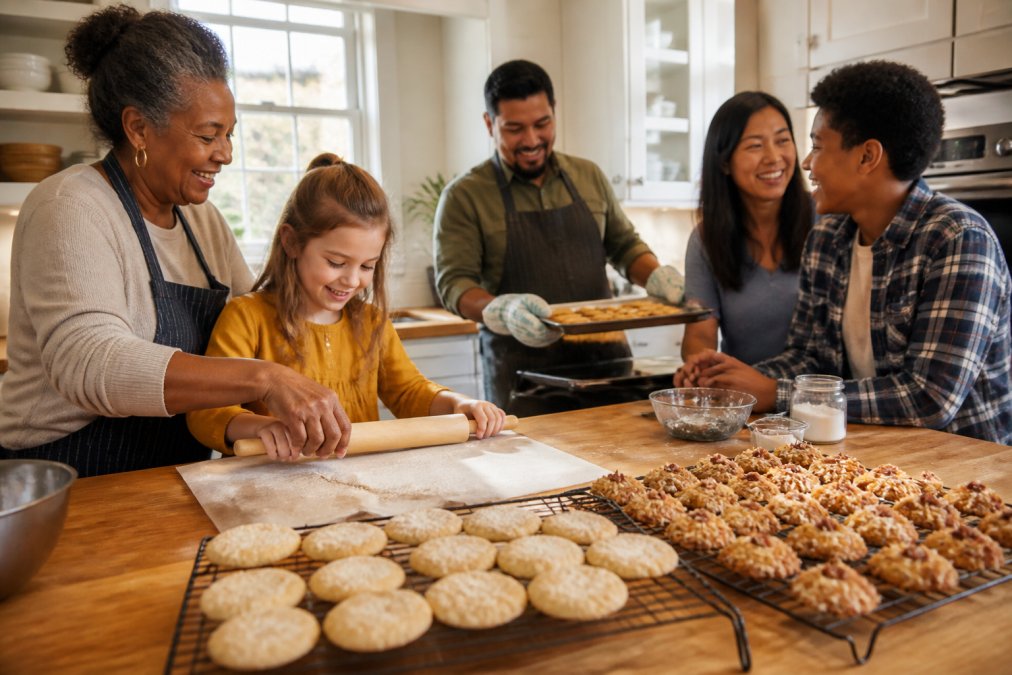
Teacakes sit at the center: soft, buttery, rolled thin, baked until the edges just set, often dusted with confectioner's sugar. Coconut pecan cookies follow, pairing flaked coconut with toasted pecans for a chewier bite. These old-fashioned favorites were designed for sharing, not speed.
What Modern Baking Mixes Actually Change
A modern baking mix changes three things: prep time, consistency, and decision count. The dry ingredients are already measured, sifted, and balanced, so most scratch failures disappear.
Here's what a mix genuinely removes from the process:
- Measuring flour by volume and accidentally packing it
- Guessing whether your leavening agents are still active
- Balancing the fat-to-flour ratio by feel
What a mix doesn't remove is craft. You still bring the butter and eggs, and you still control chill time, scoop size, and oven temperature, three variables that decide more about texture than flour ever will. The trade-off: a mix locks in one flavor profile, while scratch lets you brown the butter or split a batch into three finishes.
Easy Dessert Recipes for Beginners: Step-by-Step for Both Methods
Easy dessert recipes for beginners succeed when the method removes guesswork, not when the recipe is short. Both paths work for a first-timer.
Scratch Method: Creaming, Chilling, and Timing
Total time: about 1 hour 45 minutes, including a 60-minute chill.
- Soften the butter to 65°F-70°F, it should dent under your finger, not slump.
- Cream butter and sugar 3-4 minutes until lightened; this traps air, your leavening insurance.
- Add eggs one at a time, beating just until each disappears.
- Fold in dry ingredients by hand; stop the moment flour streaks vanish.
- Chill the dough at least 60 minutes to hydrate the flour and firm the fat, limiting spread.
- Scoop and bake at 350°F for 10-12 minutes.
Expected result: edges set and barely golden, centers still soft when you pull the tray.
Mix Method: What You Add and What You Skip
Total time: about 25 minutes.
- Empty the mix into a bowl and break up clumps.
- Add the butter and eggs the package calls for, and nothing else.
- Stir until just combined, overmixing develops gluten and a cake-like crumb.
- Scoop onto a lined tray, 2 inches apart.
- Bake at the package temperature, usually 350°F, for 10-12 minutes.
Expected result: a consistent batch every time, with no measuring errors to troubleshoot.
| Step | Scratch Method | Mix Method | Time Saved |
|---|---|---|---|
| Ingredient measuring | 8-10 minutes | Under 1 minute | ~9 minutes |
| Creaming and mixing | 6-8 minutes | 2-3 minutes | ~5 minutes |
| Chill time | 60 minutes | Optional | Up to 60 minutes |
| Cleanup | Multiple bowls and tools | One bowl, one spoon | ~10 minutes |
| Total active time | ~35 minutes | ~10 minutes | ~25 minutes |
Cost Per Batch and Nutrition: What the Labels Don't Tell You
Most comparisons stop at "mixes are convenient, scratch is cheaper." That framing falls apart when you run the numbers, because scratch baking's cost isn't one batch, it's the pantry you had to build.
The Pantry Amortization Problem
Scratch only wins on cost when you bake often enough to use ingredients before they degrade. A from-scratch teacake requires flour, two sugars, leavening, butter, eggs, vanilla, and nutmeg. Bake twice a year and you're buying seven ingredients for two batches.
How to Run Your Own Cost-Per-Batch Comparison
The honest comparison is a three-column worksheet:
| Line item | Scratch | Mix |
|---|---|---|
| Dry ingredients purchased | Full packages | Included |
| Perishables purchased | Butter, eggs | Butter, eggs |
| Spoilage risk | High if you bake rarely | Low |
| Batches per purchase | Many, if used in time | One |
| Decision load | Measure, sift, balance | Open, stir, scoop |
Nutrition: Where the Real Difference Lives
USDA FoodData Central nutrition database
FDA guidance on food labeling and ingredient statements
Best Premium Cookie Mixes for Southern Flavor at Home
What Separates a Premium Mix From a Commodity Mix
Matching the Mix to the Occasion
| Occasion | Flavor Profile to Reach For | Why |
|---|---|---|
| Church social or Sunday dinner | Teacake, lightly sweet with nutmeg | Matches the restrained sweetness of the tradition |
| Cookie swap | Chocolate chip or coconut pecan | Familiar enough to disappear, distinctive enough to be remembered |
| Bake sale or fundraiser | Teacake in bulk | Consistent shape and color across dozens of cookies |
| Gifting or new-parent drop-off | Ready-to-eat baked cookies | No oven required for the recipient |
| Quiet weeknight | Any single-batch mix | Low decision load, warm result |
Flavor Profiles Worth Knowing
A Note on Baked Versus Mix-Your-Own
Getting a Soft and Chewy Texture From Either Method
Holiday Baking, Cookie Swaps, and Batch Baking for a Crowd
USDA FoodData Central nutrition database

FDA guidance on food labeling and ingredient statements
Frequently Asked Questions
Are modern baking mixes as good as homemade Southern cookie recipes?
It depends on the mix. A premium mix built on real vanilla, nutmeg, and cane sugar can match a from-scratch teacake for flavor and texture, while budget mixes often rely on artificial flavoring and come out cakey. The deciding factors are ingredient quality and what you add at home. With a good Southern cookie recipe mix, you skip measuring flour and leavening but still control the butter, eggs, and mixing time that shape the final chew.
What are some classic Southern cookies I should try first?
Teacakes lead the list: soft, buttery, lightly sweet, and scented with vanilla and nutmeg. Coconut pecan cookies come next, built on flaky coconut and Texas pecan halves. Both appear at Sunday dinners, church socials, and cookie swaps across the South. If you are new to Southern baking, start with teacakes because the flavor is gentle and the dough is forgiving. They also hold up well for shipping and gift boxes.
How do I get soft and chewy cookies instead of dry, cakey ones?
Pull the cookies from the oven when the centers still look slightly underdone, usually a minute or two before the recipe says. Let them finish on the hot sheet. A higher fat-to-flour ratio, brown sugar in place of some white sugar, and a brief chill on the dough all push the texture toward soft and chewy. Overmixing after the flour goes in develops gluten and turns cookies tough, so stop as soon as the dough comes together.
Why do people choose baking mixes for family events and cookie swaps?
Prep time and consistency. A mix removes the measuring, sifting, and leavening guesswork, so a batch moves from counter to oven in a few minutes and kids can help without a flour cloud. For a cookie swap or holiday baking, that reliability matters more than showing off technique. You get the same result on batch three as batch one, which is hard to do from scratch when you are baking twelve dozen at once.
Can you make easy dessert recipes for beginners with a Southern cookie mix?
Yes, and that is the main reason beginners reach for a mix. The dry ingredients, leavening agents, and flavorings are already balanced, so the only variables left are butter, eggs, and oven temperature. An oven thermometer and a timer fix most beginner mistakes. Start with a small batch, note how your oven runs, and adjust bake time by a minute or two on the next round. That single habit improves results more than any recipe upgrade.